

Jorge - The Guardian of Casa Providencia
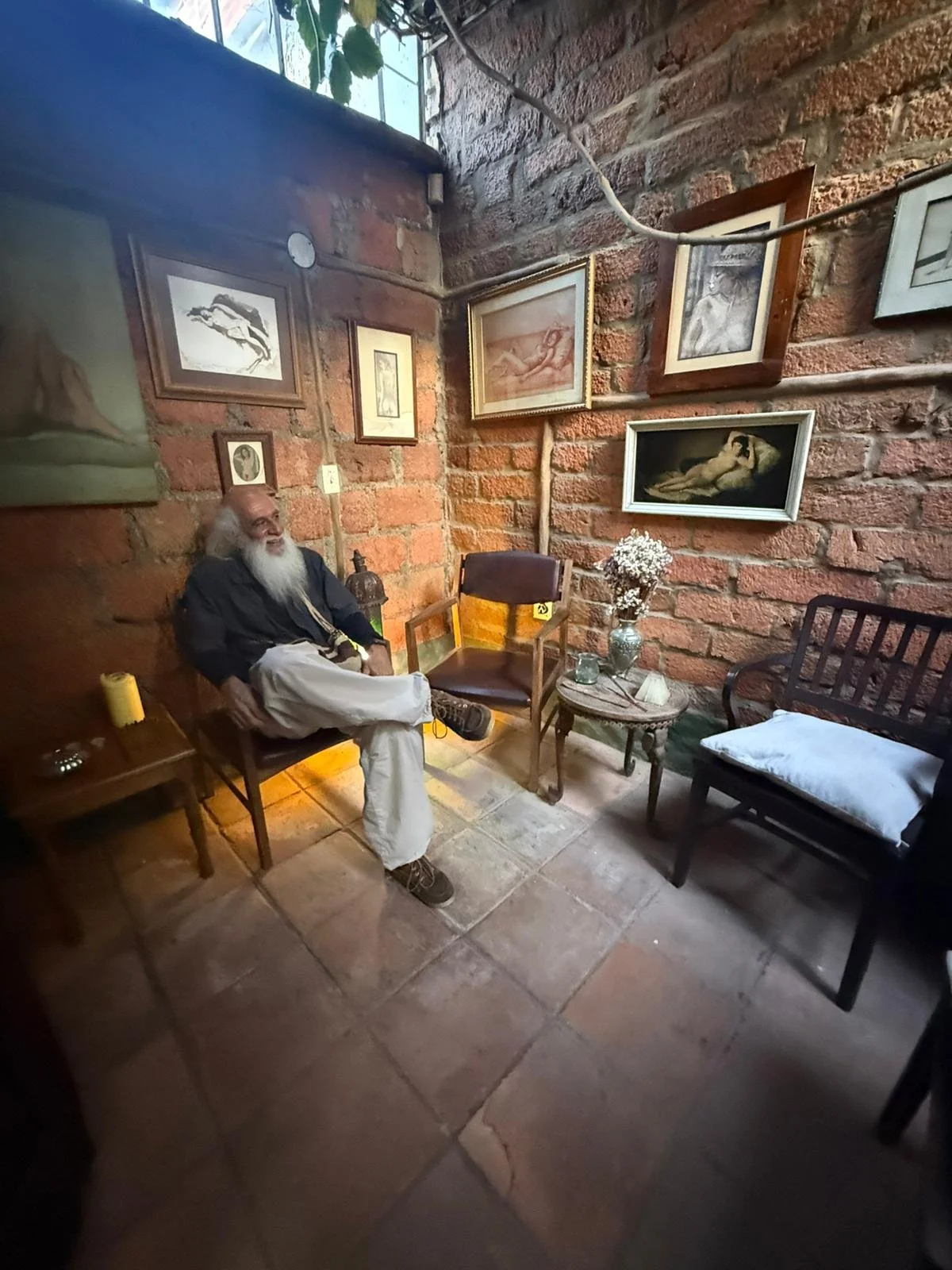
“When I first entered, I felt this house had a soul.”
Jorge moves through Casa Providencia with the familiarity of someone who has listened to its silences for decades. His presence blends into its space. With his long white beard, calm voice, and steady gestures, he feels like the house’s keeper. The charming mysterious villa has shaped his life as much as he has shaped its survival.
He arrived here more than thirty years ago, not searching for destiny, but simply for a home. A friend brought him to see the house in the mid-1990s. There was no sign announcing a sale, no clear intention. He walked through the rooms, felt the light, the walls, the proportions, and something settled. The people who lived here at the time sensed it too. They trusted him with the house. That trust became a long relationship.
“I never imagined I would live in a house like this.”
As a child, Jorge walked through Prado, admiring its architecture without imagining that one day he would inhabit one of its historic homes. Prado was once a neighborhood of wide streets, trees, and elegant houses, deeply connected to the city’s social and cultural life. Over time, large infrastructural changes altered its rhythm. Avenues and the metro reshaped its boundaries, and the neighborhood slowly became fragmented.
Jorge lived in Casa Providencia during those transitions. He raised his family here, left at times, returned again. His daughter grew up here. The house was lived in, rented, emptied, and reclaimed. Through all of this, his attachment to the house never disappeared. For him, it was never a simple building but a place that held memory, continuity, and a sense of belonging that endured through change.
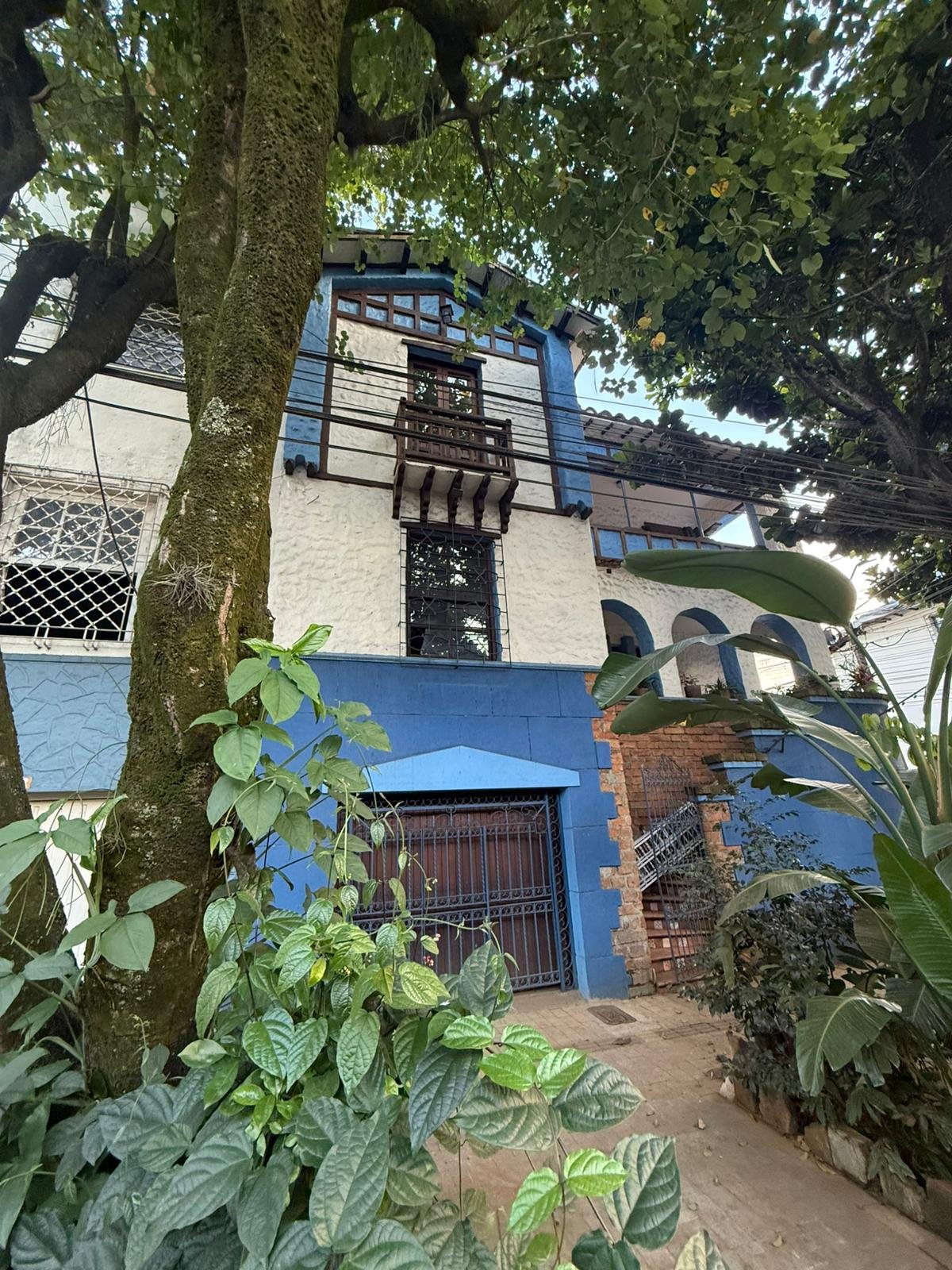
“Those years were the story of Medellín.”
The most difficult years did not spare Prado. Jorge speaks about that period with clarity and restraint. The violence and abandonment that marked the 1990s and early 2000s were not isolated to one neighborhood. They were part of a larger story unfolding across Medellín.
During that time, Casa Providencia remained standing. Maintaining a house like this requires constant care. Without attention, these old structures deteriorate quickly. Jorge cleaned, repaired, tended the garden, and swept the street outside. These acts were practical, necessary, and continuous. For him, caring for the house was also a way of staying connected to the neighborhood, of refusing to let neglect become permanent.
“I want the house to stay alive.”
About three years ago, Jorge returned to Casa Providencia once more, and something shifted. After decades of living with the house, he understood that keeping it alive meant opening it. Not turning it into a museum, and not preserving it as a private refuge, but allowing it to be inhabited in new ways.
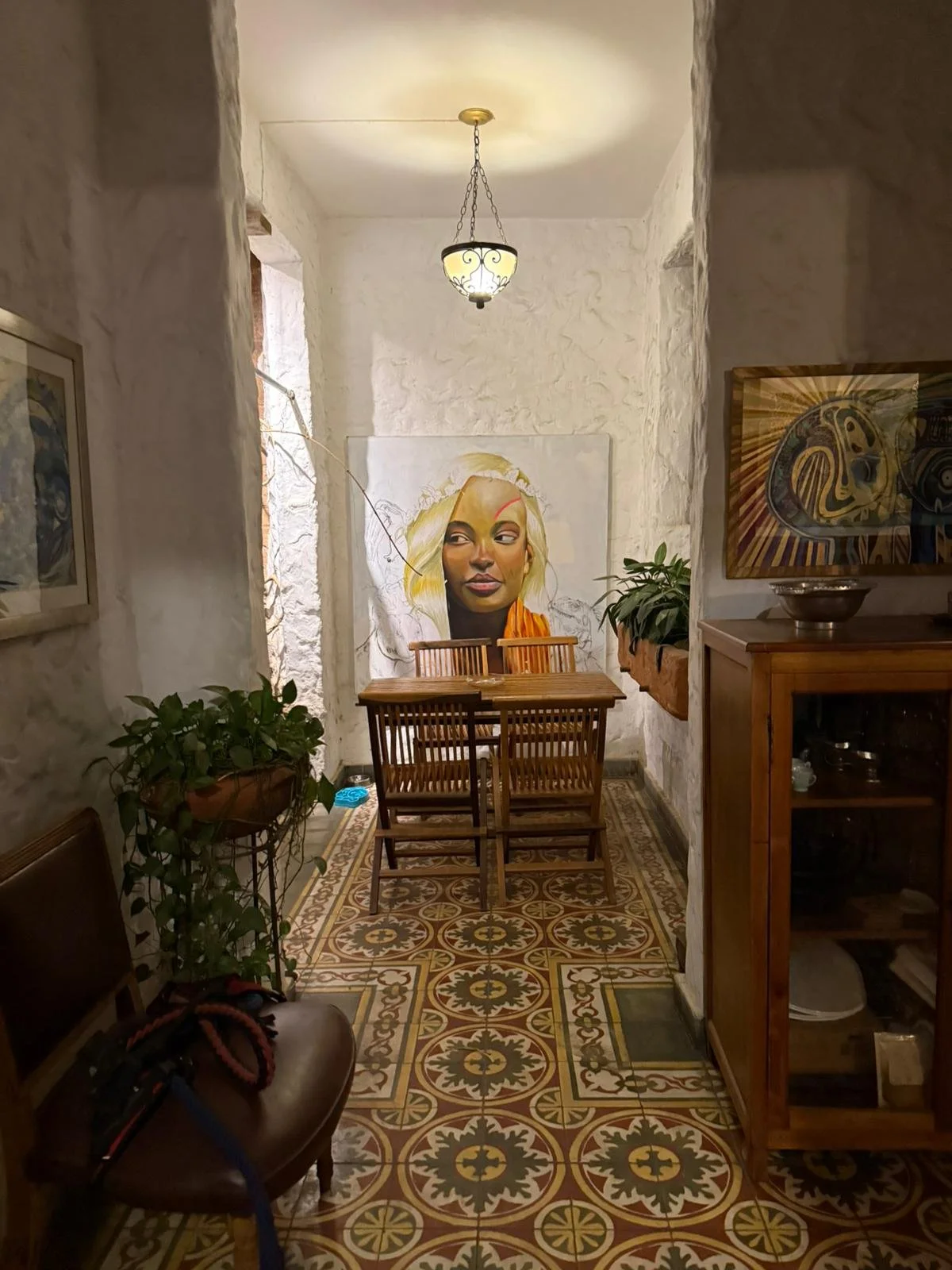
Casa Providencia became a cultural home or what Jorge calls a house for artists. Concerts, exhibitions, conversations, gastronomic events, film shoots, and artistic gatherings now take place within its walls. There is no fixed program and no strict definition of what belongs. Any artistic expression connected to culture, creativity, and community is welcome.
The house remains a home, but it is also a shared space, one that participates quietly in the cultural renewal of Prado. Jorge does not frame this as a project or a mission. For him, it is simply a continuation of care.
“Taking care of this space fulfills me deeply.”
Jorge’s relationship with the house is physical and everyday. He cleans it daily. He maintains the garden. He sweeps the street, even when others leave trash behind. He runs through the neighborhood with his dog. He dances salsa with joy for the beauty of the movement itself. Motion matters to him in the body, in the house, and in the life of the neighborhood.
He knows how much maintenance these houses require to remain standing. He hopes that Casa Providencia will continue to be cared for long after him. The satisfaction he describes comes from responsibility from knowing that something fragile has been held with consistency.
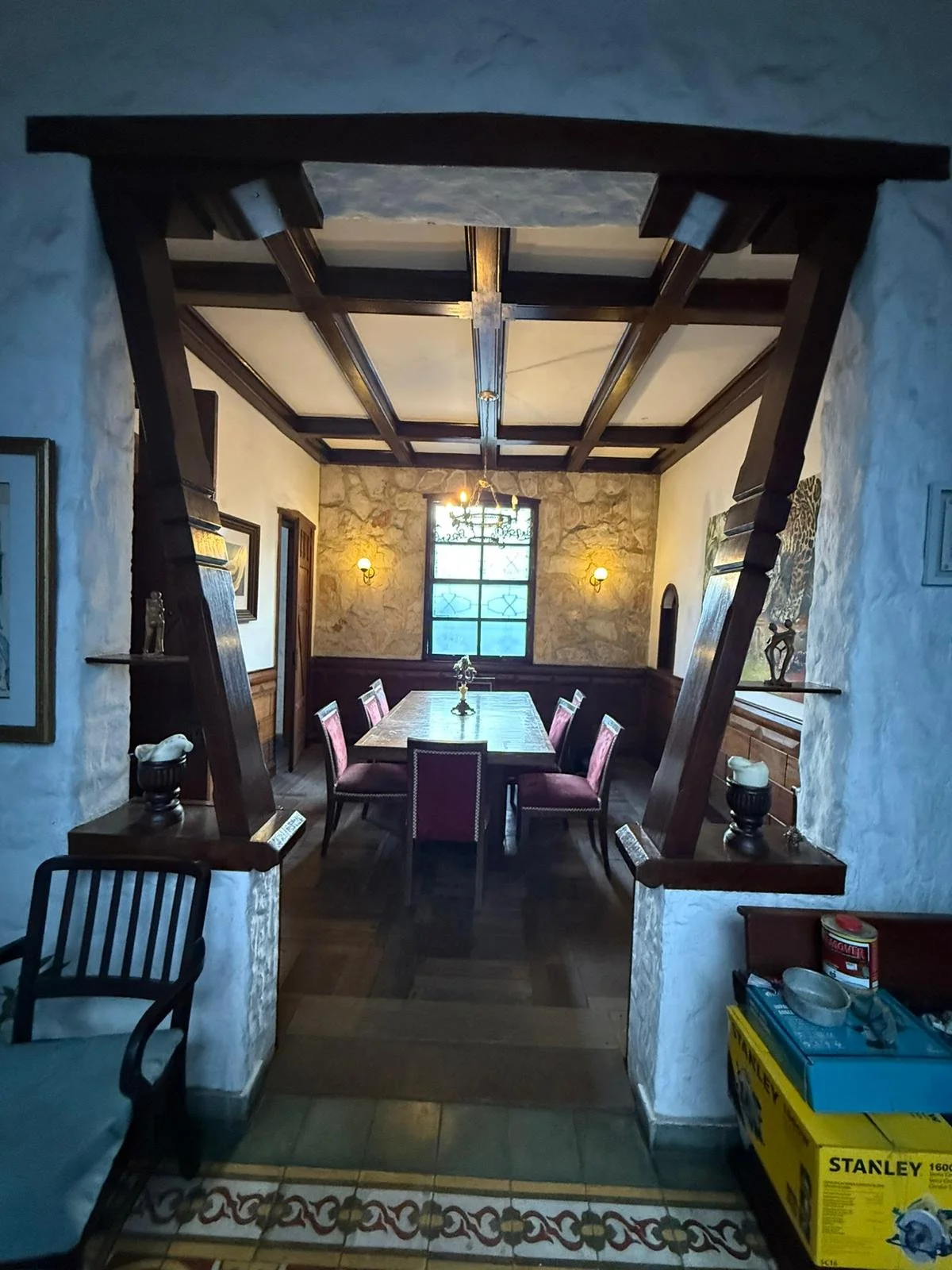
“If this house could speak…”
When asked what Casa Providencia would say if it had a voice, Jorge answers without hesitation. It would say that it is happy. Happy to receive people, emotions, and diversity. Happy to feel that its walls, spaces, materials, and views still matter. It would welcome everyone who enters with care and good energy, inviting them to share life within it.
Casa Providencia stands today as a living presence in Prado, not frozen in the past, not detached from the present. It continues to listen, to receive, and to breathe through the people who cross its threshold.
Jorge remains there, quietly, as its guardian.
Why I share Jorge’s story
I am sharing Jorge’s story because it reflects something I keep encountering as I travel as someone moving through the world to understand himself better. Real leadership often looks like this: quiet, consistent, embodied. It lives in people who choose to stay, to care, to open their doors without spectacle.
Jorge is not trying to save Prado. He is simply inhabiting it fully. And sometimes, that is enough to change the atmosphere of a place.
Casa Providencia is alive because someone loved it for thirty years without asking it to be anything other than what it was becoming. In a city that has learned hard lessons about loss and renewal, that kind of presence matters.
And so does telling these stories.
**
This piece is part of a new series dedicated to stories of leadership, resilience, and transformation that inspire through presence rather than performance. It traces a journey of compassionate eco-leadership — one that moves quietly from mind to heart, from ego to eco, through the lives of people who choose to care, stay, and listen.
Editor’s Note — Why This Story Lives on Soul Dreamers
Soul Dreamers began in Lisbon, but it was never only about one city.
It is about people, about guardians of place, about those who quietly keep culture, memory, and community alive in Mouraria, Alfama, or Prado in Colombia.
I met Jorge in Medellín while working on social impact and regenerative tourism projects. His way of caring for Casa Providencia reminded me deeply of the spirit I see in Lisbon’s hidden neighborhoods.
This story is part of my ongoing journey to understand what conscious, human-centered travel really means across cultures and continents.
— Teddy
