

The Ethics of Hidden Gems: When Should Travelers Be Told About a Secret Place?
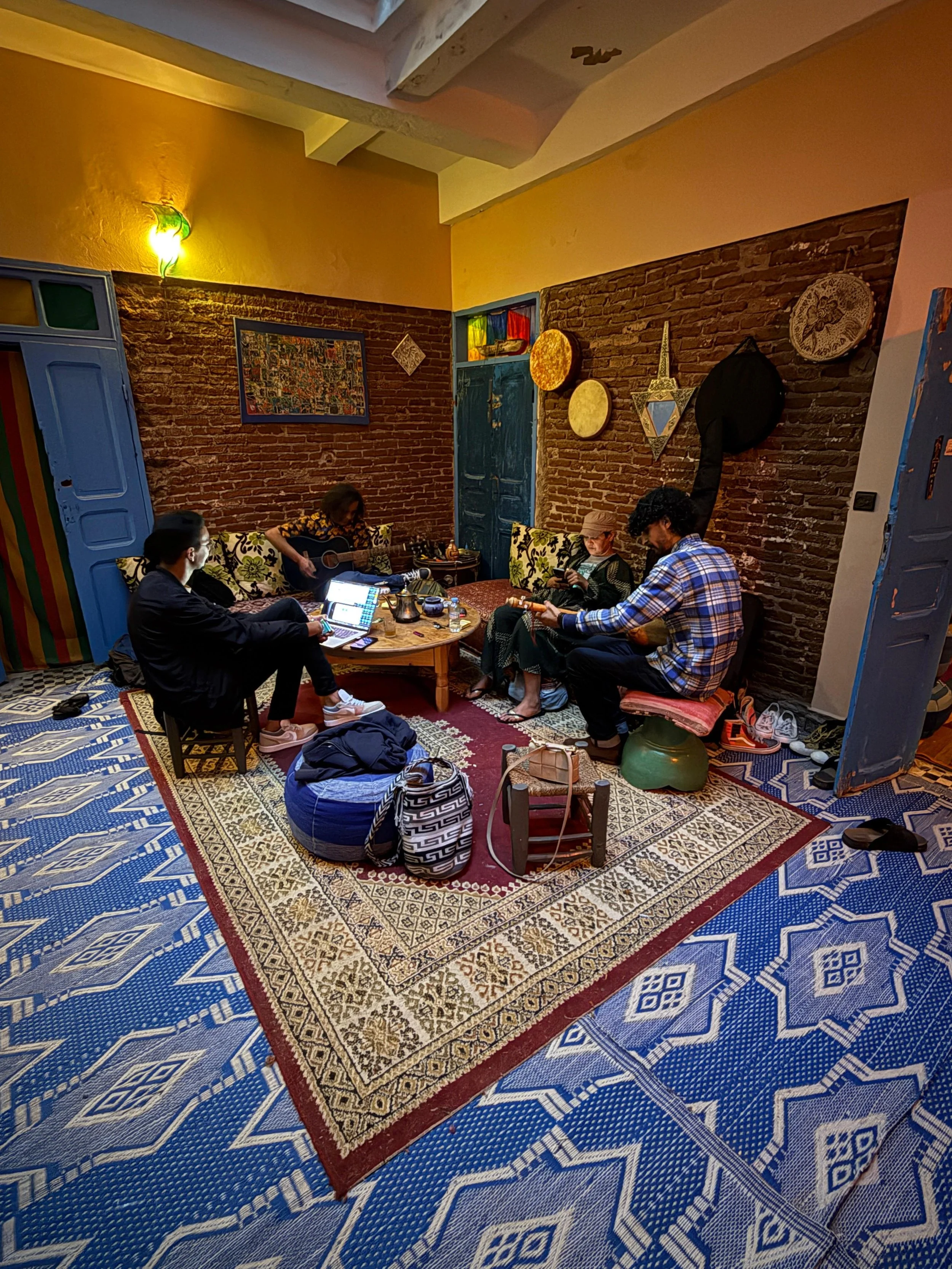
There is a particular pleasure in finding somewhere that does not seem to have been prepared for you.
Perhaps you turn down an unremarkable street and hear music through an open door. You enter a tiny restaurant where there is no English menu and the person serving you decides what you should eat. Someone introduces you to an artist working in a room behind a shop, or you spend an evening in a cultural space you would never have noticed from the street. Nothing announces itself as an “experience.” Nobody has placed a sign outside promising authenticity. For a few hours, you have the exhilarating sensation that you have slipped behind the visible city and encountered something more intimate.
Travelers tend to describe such places as hidden gems. We tell our friends about them with enthusiasm. Travel writers build stories around them. Tour companies turn them into itineraries. Instagram and TikTok can transform them into destinations almost overnight. And somewhere in this process, a difficult question appears: if we genuinely value a place because it feels local, intimate and relatively untouched by tourism, what happens when we tell everyone else where it is?
This question sits uncomfortably close to the heart of what I do with Soul Dreamers. Much of our work is about taking people beyond the polished surface of a destination and introducing them to neighborhoods, musicians, family businesses, artists, community projects and stories that conventional tourism often overlooks. I believe deeply in the value of those encounters. They can redistribute tourism income, challenge stereotypes and create the kind of human connection that changes how we understand a city.
Yet the contradiction is impossible to ignore. The more successful we become at revealing hidden places, the greater our capacity to change them.
Perhaps, then, the ethics of a hidden gem begins not with the question of where we should travel, but with something more difficult: who has the right to make a place visible?
The tourism paradox: we love places partly because tourism hasn't changed them yet
The tourism industry has always been fascinated by discovery. Long before social media, guidebooks promised villages “off the beaten track,” travel magazines revealed secret beaches, and backpackers exchanged the names of restaurants absent from mainstream guides. The language has changed, but the promise remains essentially the same: come before everybody else does.
The paradox is that when enough people accept the invitation, the conditions that made the place desirable begin to disappear.
A neighborhood attracts visitors because its cafés are full of residents, its rents have allowed independent businesses to survive, its streets feel spontaneous and its cultural life has not been organized around tourists. Increased attention brings economic opportunity, which can be genuinely beneficial. Restaurants gain customers, artists find audiences and previously overlooked areas receive investment. But attention also creates new incentives. Short-term accommodation becomes more profitable than long-term housing. Businesses begin adapting products and prices to visitors. Commercial rents rise. Residents who created the culture that attracted outsiders may gradually find themselves unable to afford the neighborhood that has suddenly become desirable.
Eventually, visitors begin complaining that the place has become “too touristy.”
There is something almost absurd about this cycle. Tourism participates in changing a place and then criticizes that place for having changed.
Lisbon provides an unusually visible laboratory for this tension. Neighborhoods such as Alfama and Mouraria have become globally recognizable partly because visitors are attracted to precisely the qualities that mass tourism can place under pressure: dense neighborhood life, small businesses, historic housing, street-level social interaction and a sense that the city is being lived. Research into Lisbon's touristification has documented the relationship between increasing visitor pressure, changes in housing and land use, and transformations in the social fabric of historic neighborhoods.
But the conclusion cannot simply be that tourists should stay away. Tourism can sustain livelihoods, support cultural practices, finance conservation and create encounters across social worlds that might otherwise never meet. The ethical question is more complicated. It is not simply whether visitors should enter less-known places, but under what conditions their presence becomes beneficial.
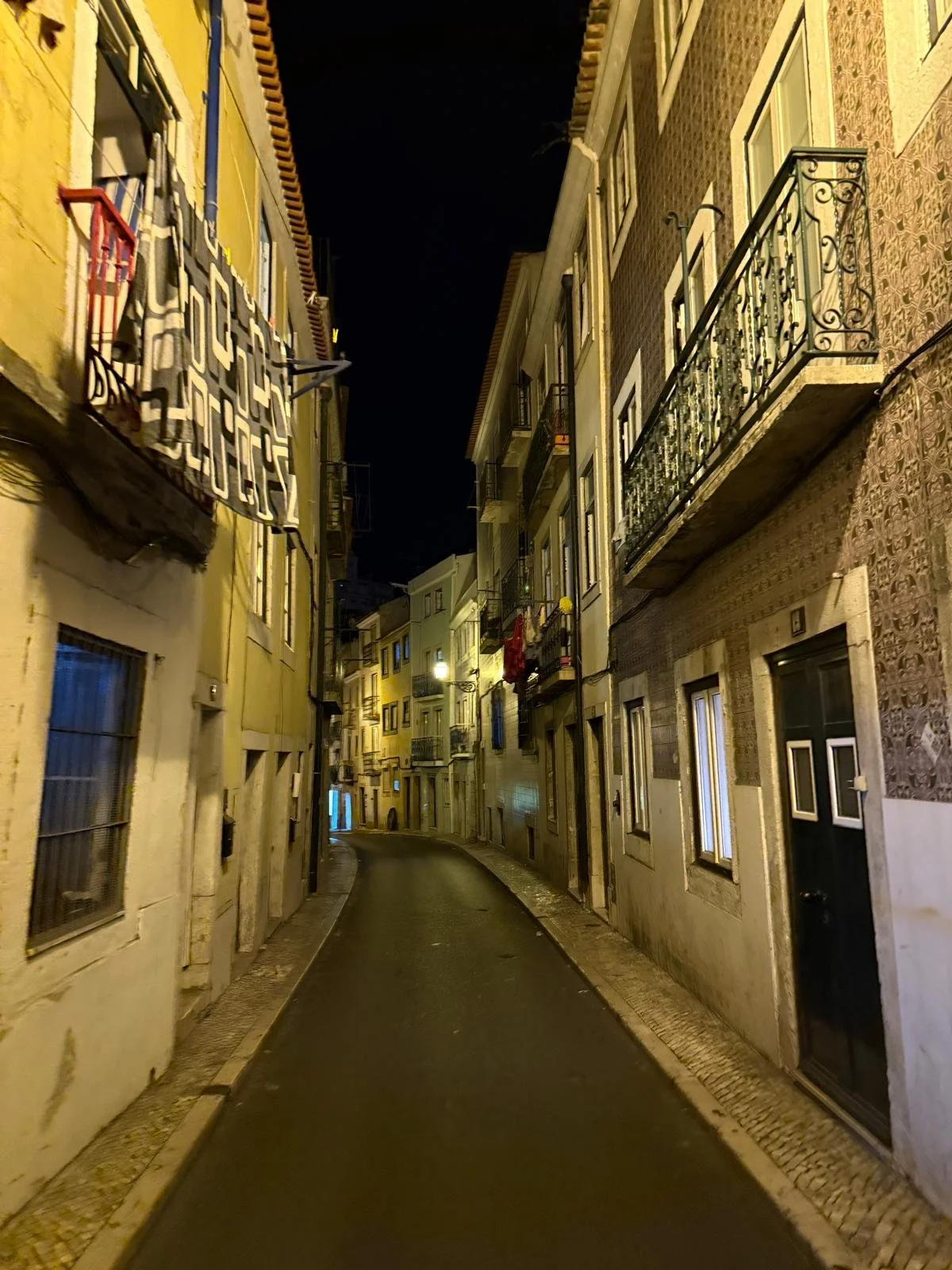
Quiet street at night in Mouraria, Lisbon
Social media has changed the mathematics of discovery
The ethics of recommendation used to operate at a human scale. You found a wonderful restaurant and told five friends. Perhaps two eventually went. A traveler wrote about a remote beach in a guidebook, but discovering it still required buying the book, reading it and making the journey.
Digital platforms have radically altered that equation. A single photograph can now expose a fragile location to hundreds of thousands of people within days. Recommendation has become infrastructure.
Researchers increasingly use geotagged social-media activity to understand actual visitor movement because online attention and physical tourism behavior are closely connected. In environmentally sensitive destinations, researchers have also begun examining how user-generated imagery shapes expectations about landscapes and contributes to concentrated visitor pressure.
This means that posting a photograph is no longer necessarily a passive act. At sufficient scale, it can participate in changing the physical world it depicts.
The issue is not that social media is inherently destructive. Digital visibility can give an independent artist an international audience, help a rural cooperative sell its products, or redirect tourism spending toward places that desperately need economic alternatives. But scale matters. A recommendation shared among friends and a recommendation broadcast to 800,000 followers are ethically different actions, even if the words are identical.
This is why I increasingly think that responsible travel needs a concept we rarely discuss: the carrying capacity of attention.
We normally think about carrying capacity physically on how many people a trail, beach, museum or ecosystem can accommodate. But communities have social carrying capacities too. How much tourism can enter a neighborhood before daily life begins reorganizing around visitors? How many strangers can enter a small cultural space before intimacy becomes performance? At what point does a family-run restaurant stop serving the community that created it because international demand has become economically irresistible?
There is no universal number. But pretending the question does not exist is no longer credible.
The right to remain invisible
Travel culture has developed another assumption that deserves examination: if we discover something beautiful, interesting or unusual, we have somehow earned the right to share it.
I am no longer convinced that we have.
Not every place needs exposure. Not every ceremony needs documentation. Not every community needs international visitors. Not every musician wants to become a tourist attraction. Sometimes a fragile ecosystem is better protected by remaining difficult to find. Sometimes a neighborhood's greatest asset is precisely that it continues to function primarily for the people who live there.
There is a meaningful distinction between secrecy and stewardship. Choosing not to reveal something can sometimes be an act of care.
This becomes especially important when tourism enters spaces involving vulnerable communities, spiritual practices, indigenous knowledge, informal economies or deeply personal histories. In such contexts, visibility is not automatically empowerment. Exposure can create money and opportunity, but it can also create surveillance, commodification and loss of control over how a community represents itself.
Perhaps the question should therefore shift from “Can I share this?” to “What could happen if I share this?”
The second question forces us to imagine consequences beyond our own experience.
Consent is more important than discovery
Imagine finding a tiny cultural space where twenty people are listening to musicians perform. The atmosphere is extraordinary. Nobody appears to have discovered it yet. Your instinct as a travel designer is immediate: my guests would love this.
At that moment, there are two possible ways forward.
The extractive version is remarkably easy. Photograph the place, tag its location, add it to an itinerary and begin selling access to something somebody else created.
The collaborative version begins with a conversation.
Do you actually want travelers here? How many would feel comfortable? Which evenings make sense? Would their presence help sustain the space or disrupt it? Should visitors buy drinks, pay an entrance fee or contribute directly to the musicians? Are photographs welcome? Do you want the location published online, or would you prefer people only arrive through trusted introductions?
These are mundane questions compared with the romance of discovering secret places, but they fundamentally change the relationship.
Consent means recognizing that the people creating cultural value should have some control over how that value enters the tourism economy.
This is particularly important because the distribution of power is rarely equal. A travel company may control international audiences, booking platforms, marketing expertise and access to relatively wealthy visitors. A neighborhood organization may possess extraordinary cultural knowledge while having almost none of those resources. If the tourism company simply packages that knowledge more efficiently and captures most of the economic value, calling the resulting product “community tourism” does not resolve the imbalance.
Co-creation should mean more than asking permission to enter. Ideally, it means allowing local partners to influence what is shown, how it is interpreted, how frequently visitors come and what economic relationship feels fair.
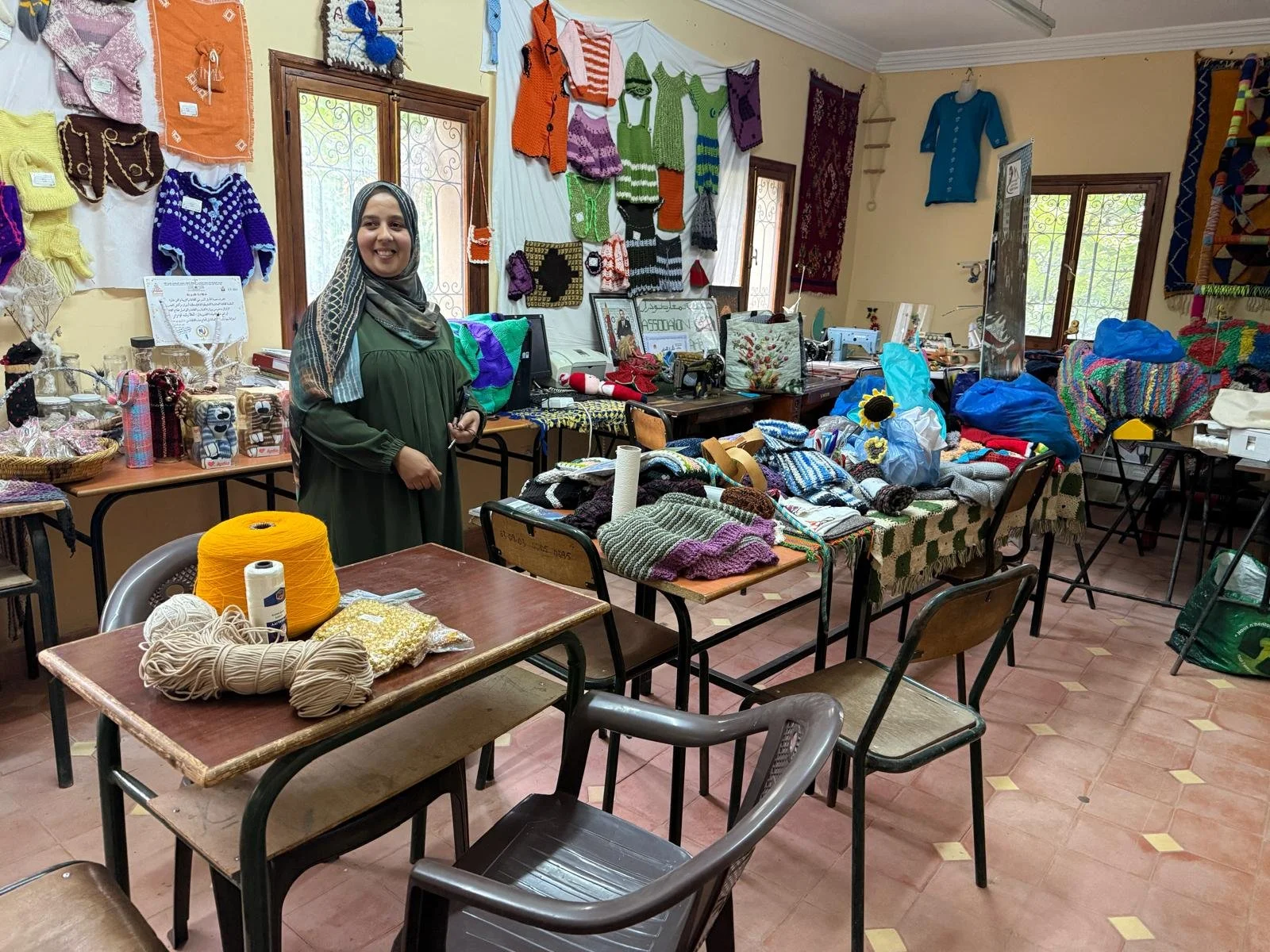
Social community women run artisan project in Imlil, Morocco
Follow the money, but also follow the dignity
Economic impact is one of the easiest claims for responsible tourism companies to make. We support local businesses. We eat locally. We employ local guides. All of these things matter, but they do not tell the whole story.
Suppose twelve travelers enter a neighborhood because of its migration history, street art, music and community activism. They have paid a tour company to access that experience. They photograph murals created by local artists, hear stories produced by decades of community struggle, visit a social project and perhaps buy a coffee before leaving.
Who created the value they came to experience?
Often it was precisely the people receiving the smallest share of the tourism revenue.
This is why I have become increasingly interested in designing journeys where travelers meet the actual people, legends or “rock stars” behind the story. If a community leader spends forty minutes explaining a neighborhood's transformation, that person's knowledge has value. If an artist opens a studio to strangers, that access has value. If a family prepares food and shares the history behind it, the experience should not be treated as colorful scenery surrounding somebody else's tourism product.
Payment is part of this, but dignity goes further than payment. Local partners should not become performers trapped inside the identity visitors expect them to represent. A community is allowed to change. An artisan is allowed to modernize. A young person is allowed to reject a tradition that tourists find picturesque. Ethical tourism cannot require communities to remain frozen in the version of themselves that outsiders find most authentic.
This may be one of the most problematic uses of the word “authenticity” in travel. We often use it to describe a destination that appears sufficiently untouched by people like us.
Perhaps authenticity should instead describe the quality of the encounter. Was it honest? Was curiosity mutual? Could both sides say no? Was the person we met treated as a human being? Did the encounter create dignity?
Those questions seem far more useful than whether somewhere qualifies as a hidden gem.
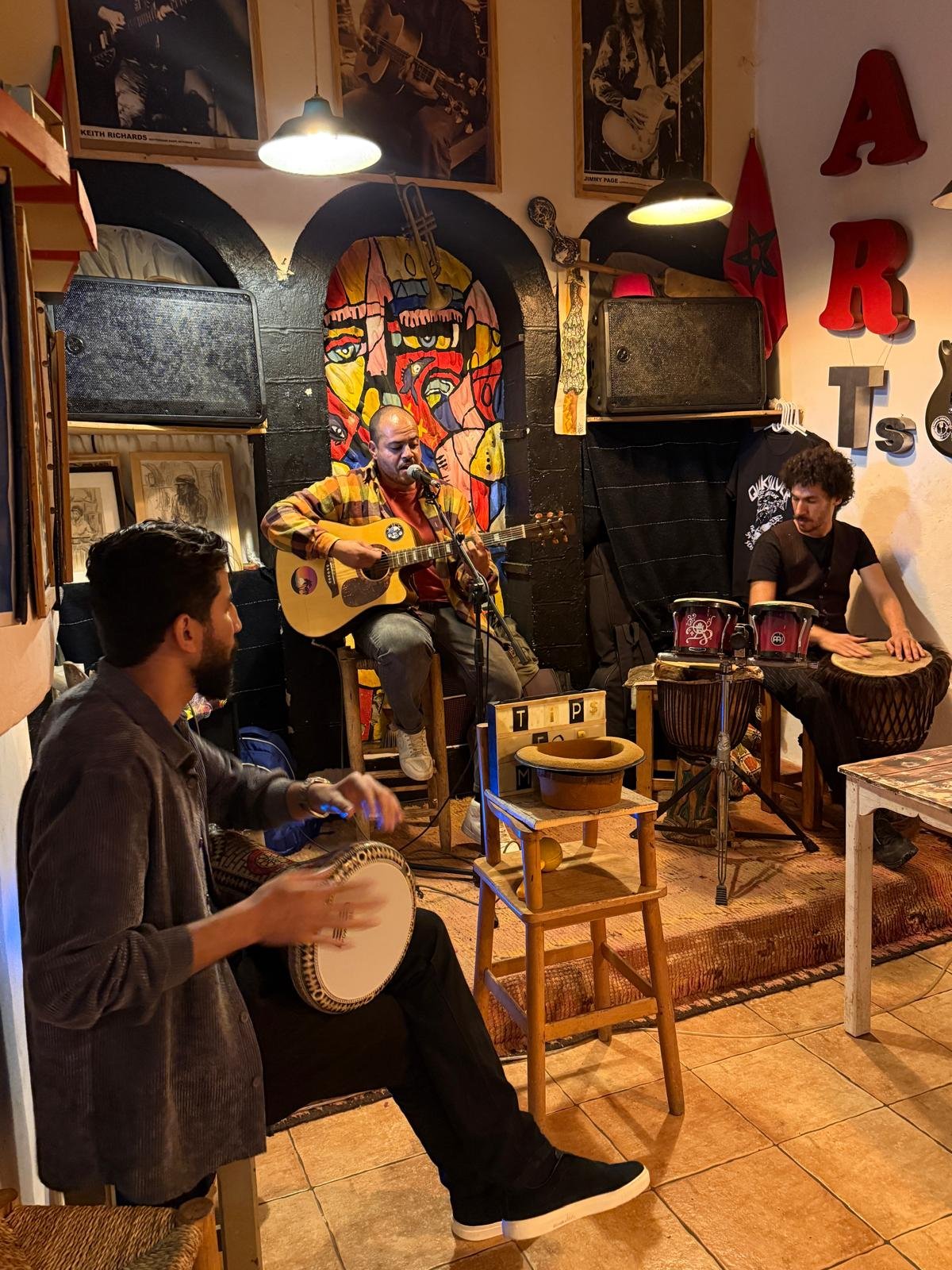
Jam session in Essaouira, Morocco
Small groups are not merely a luxury product
The question of scale appears again when we think about group size.
A small group sitting around a table with an artist can have a conversation. Forty people entering the same studio create crowd management. Ten travelers walking slowly through a neighborhood can notice its rhythms and adapt to what is happening around them. Several buses arriving simultaneously impose a rhythm of their own.
For Soul Dreamers, this is one reason small groups matter beyond the quality of the guest experience. Smallness creates flexibility. If a local partner is tired, plans can change. If a space feels overwhelmed, we can move elsewhere. If an unexpected conversation becomes meaningful, we can stay.
Small groups also make reciprocity more possible. People can introduce themselves. Hosts can ask travelers questions. The encounter becomes less like an audience watching a performance and more like two groups of people temporarily sharing a space.
None of this means that small tourism is automatically ethical. Ten insensitive visitors can cause more harm than fifty thoughtful ones. But smaller scale creates conditions in which responsiveness, consent and human connection are easier to preserve.
The challenge is that the tourism industry is structurally rewarded for growth. Success is measured through more bookings, more departures, more destinations and greater reach. Regenerative tourism may eventually have to confront an uncomfortable possibility: sometimes the responsible decision is not to scale.
That is a difficult proposition in business, but an important one.
Hidden gems and gentrification are connected by attention
The relationship between tourism and gentrification is complicated, and it would be simplistic to claim that tourists alone cause displacement. Housing policy, international investment, local planning decisions, labor markets and wider economic forces all matter enormously.
But tourism can accelerate existing pressures by transforming attention into demand.
A neighborhood becomes desirable partly because people begin telling stories about it. Artists arrive because rents are affordable. Cafés follow. International media notice. Visitors arrive. Short-term rentals become profitable. Investors recognize an opportunity. Eventually the symbolic value created by residents becomes financial value captured through property.
The “hidden gem” is therefore not merely an innocent travel concept. It participates in an economy of attention.
This is particularly relevant for travel designers who build businesses around discovering places before mainstream tourism does. We are effectively intermediaries between local cultural capital and global purchasing power. That position carries responsibility.
If our work contributes to making somewhere desirable, we should also be asking how our presence can strengthen the people already there. Can tourism revenue support community organizations? Can we prioritize locally owned businesses? Can local residents become partners? Can we avoid publicly exposing places whose intimacy would be damaged by uncontrolled visitation?
There may not always be clean answers, but asking these questions changes the way itineraries are designed.
Sometimes visibility is exactly what a community needs
There is an important danger in romanticizing invisibility too.
Communities are not museum pieces that ethical travelers must protect from contact with the outside world. Some actively want tourism. Some need it.
A women's cooperative may need customers to make traditional crafts economically viable. A conservation initiative may need visitors to fund habitat restoration. A musician may want an international audience. A rural family may see tourism as an alternative to leaving their community for work elsewhere. A neighborhood organization may use tourism to challenge stigma and tell its own story.
In these situations, visibility can become a form of power. The difference is agency.
There is a profound distinction between tourism happening to a community and tourism being built with a community. The first asks, “How can we turn this interesting place into an experience?”
The second asks, “What kind of visitors would you like to receive, what would you like them to understand, and how could their presence support what you are already trying to build?”
This shift sounds subtle, but it changes almost everything.
A hidden gem should perhaps remain partly hidden
One practice I increasingly appreciate is selective disclosure.
Travel companies do not necessarily need to publish every location in advance. A website can describe an encounter without naming the exact family, studio, community project or intimate venue involved. Travelers can understand what kind of experience they are purchasing without being given a downloadable map of every fragile relationship behind it.
This is sometimes interpreted as marketing mystery, but it can also serve an ethical function.
It prevents places from being detached from the context in which they were introduced. It reduces the likelihood that hundreds of people independently arrive at a location designed for occasional small groups. It protects relationships built on trust. And it reminds travelers that access is not the same thing as ownership.
There are also moments during a journey when a guide might explicitly ask participants not to geotag somewhere or not to photograph particular people. These boundaries should not diminish the experience. In many cases, they deepen it because they signal that travelers have entered a real social environment.
We may have become so accustomed to documenting travel that simply experiencing something privately now feels radical.
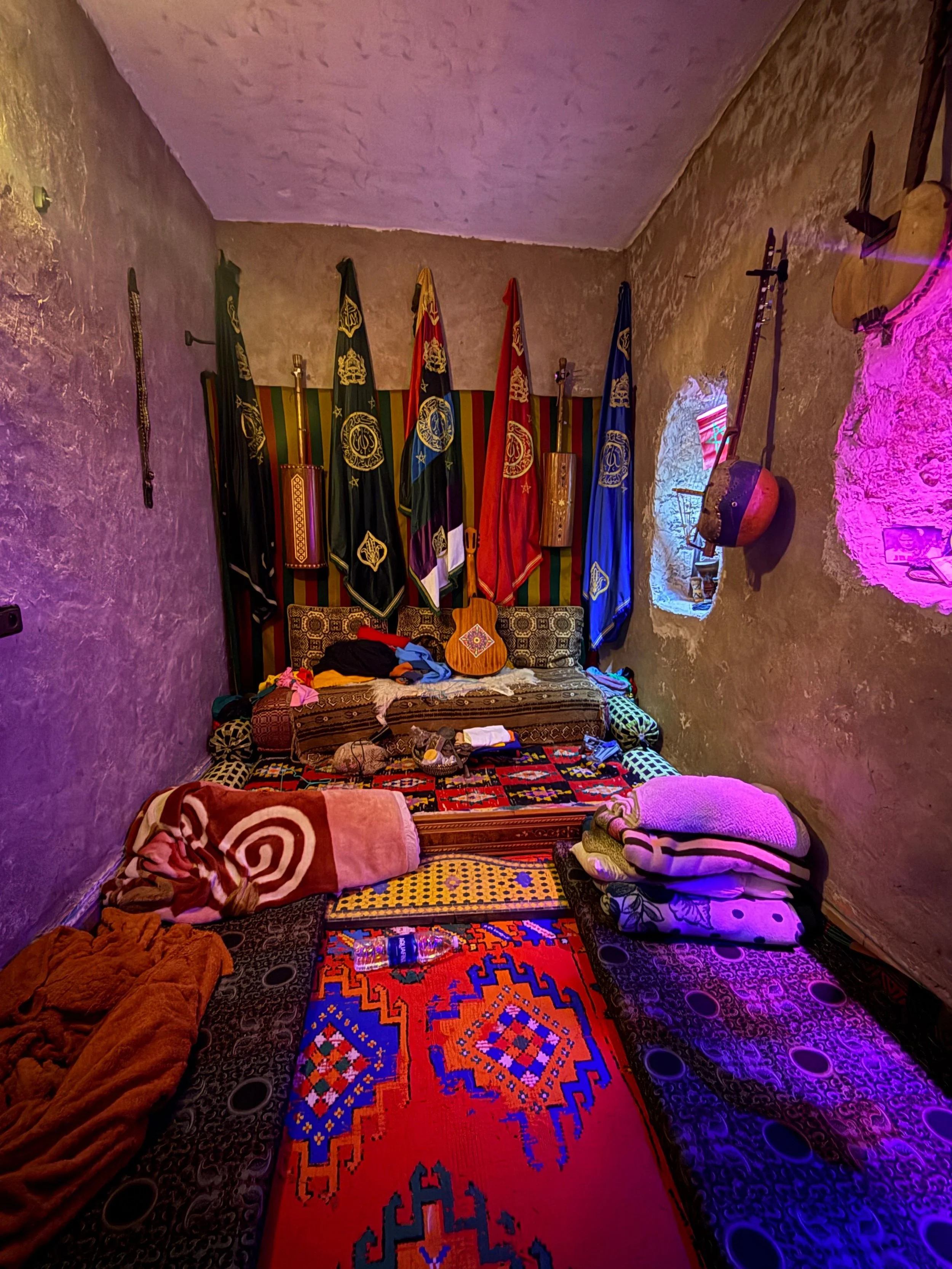
Musician’s house - Essaouira, Morocco
The paradox at the heart of Soul Dreamers
I cannot write about this as an outside observer because Soul Dreamers lives directly inside this contradiction.
I want travelers to discover places they would probably never find alone. I want them to meet community leaders, musicians, artists, cooks, social entrepreneurs and people whose lives complicate the simplified stories we often tell about destinations. I want tourism spending to reach smaller businesses and initiatives that conventional tourism frequently bypasses.
But every time we introduce somebody to a hidden place, we are also directing attention.
Attention can support a place. It can also distort it. It can create income, but it can also create dependency. It can generate pride, but it can also turn identity into performance. It can help preserve traditions, but it can also freeze them into the version visitors are willing to buy.
So perhaps the responsibility of a travel designer is not simply to discover extraordinary places. It is to manage the relationship between visibility and protection.
Sometimes that means deliberately keeping groups small. Sometimes it means rotating partners so that one space is not overwhelmed. Sometimes it means paying somebody for their knowledge rather than merely telling their story on their behalf. Sometimes it means helping a community become more visible because that is what they want.
And sometimes it means deciding that a beautiful place does not belong in an itinerary at all.
That may be the hardest decision, because it requires accepting that not everything valuable needs to become a product.
Before revealing a secret, ask what happens next
I do not think responsible tourism needs another certification checklist, but there are questions worth carrying with us.
Before sharing a place, I want to know whether the people who created it actually want more visitors. I want to understand who benefits financially from the attention. I want to know whether the place can absorb more people without changing the social or ecological conditions that make it meaningful. I want to understand whether visitors are entering somebody's everyday life as invited guests or treating that life as scenery.
I also increasingly ask myself a simple question: Would I still feel comfortable sharing this place if one hundred people followed my recommendation next week?
If the answer is no, perhaps the internet does not need the address.
For travel companies, there is another question: if our business becomes dramatically more successful, would the places we depend upon still benefit from that success?
That is a much more demanding measure of sustainability than recycling bottles or eliminating plastic straws.
It asks whether the ecosystem around the experience becomes stronger as the tourism business grows.
Maybe the real hidden gem was never the place
After years of traveling and designing experiences, I have become increasingly skeptical of our obsession with hidden gems. The places themselves obviously matter. A remarkable landscape, an old neighborhood, a tiny restaurant or an unexpected cultural space can stay with us for years. But what gives these places their emotional weight is the relationship we were able to form with them, however briefly.
A restaurant becomes meaningful because somebody explains why their family still cooks a particular dish. A neighborhood changes once we understand the migrations, conflicts and communities that shaped it. Music feels different when we know something about the musicians and the world from which it emerged. Even a landscape can become something more than scenery when somebody who has lived beside it helps us understand what is being protected, what has already disappeared and why the place matters.
This is where the language of “discovery” begins to feel inadequate. Travelers rarely discover places in any meaningful sense. The people living there already know them intimately. What we sometimes receive instead is an invitation: temporary access to another person's world, knowledge, community or way of seeing.
That invitation creates a responsibility. We can respond by turning the encounter into content, publishing the coordinates and encouraging others to reproduce our experience. Or we can ask what sharing it would actually do to the people and places involved. Sometimes spreading the story will create income, recognition and opportunity. Sometimes keeping the location relatively obscure will preserve precisely the conditions that made the encounter possible. There is no universal rule because responsible travel is ultimately relational. The answer depends on the community, the place, its capacity and what the people involved actually want.
Perhaps this is also why the best journeys cannot be completely replicated. You can follow the same route, eat in the same restaurant and stand at the same viewpoint, yet have an entirely different experience. Meaning emerges from timing, trust, conversation, curiosity and the willingness of people to open themselves to one another. Those elements cannot be pinned permanently onto Google Maps.
For Soul Dreamers, this is increasingly how I want to think about designing travel. The ambition is not to accumulate an ever-growing catalogue of secret places. It is to create the conditions in which travelers can encounter a destination more deeply while ensuring that the relationships making those encounters possible remain healthy. That may mean bringing visitors somewhere different. It may mean limiting how frequently we go. It may mean sharing revenue more sustainably in locals’ favour, allowing communities to shape the experience, or deliberately keeping certain details away from social media.
And occasionally, it may mean finding something extraordinary and deciding not to turn it into an experience at all.
Perhaps the future of meaningful travel depends less on our ability to uncover what is hidden and more on learning how to behave when somebody allows us through the door. A destination does not become ours because we have visited it, photographed it or paid to experience it. We remain guests.
Some places will benefit from being shared widely. Others will flourish through careful, limited visibility. And some deserve to remain largely unknown.
Knowing the difference may be one of the most important skills a responsible traveler and a responsible travel company can develop.
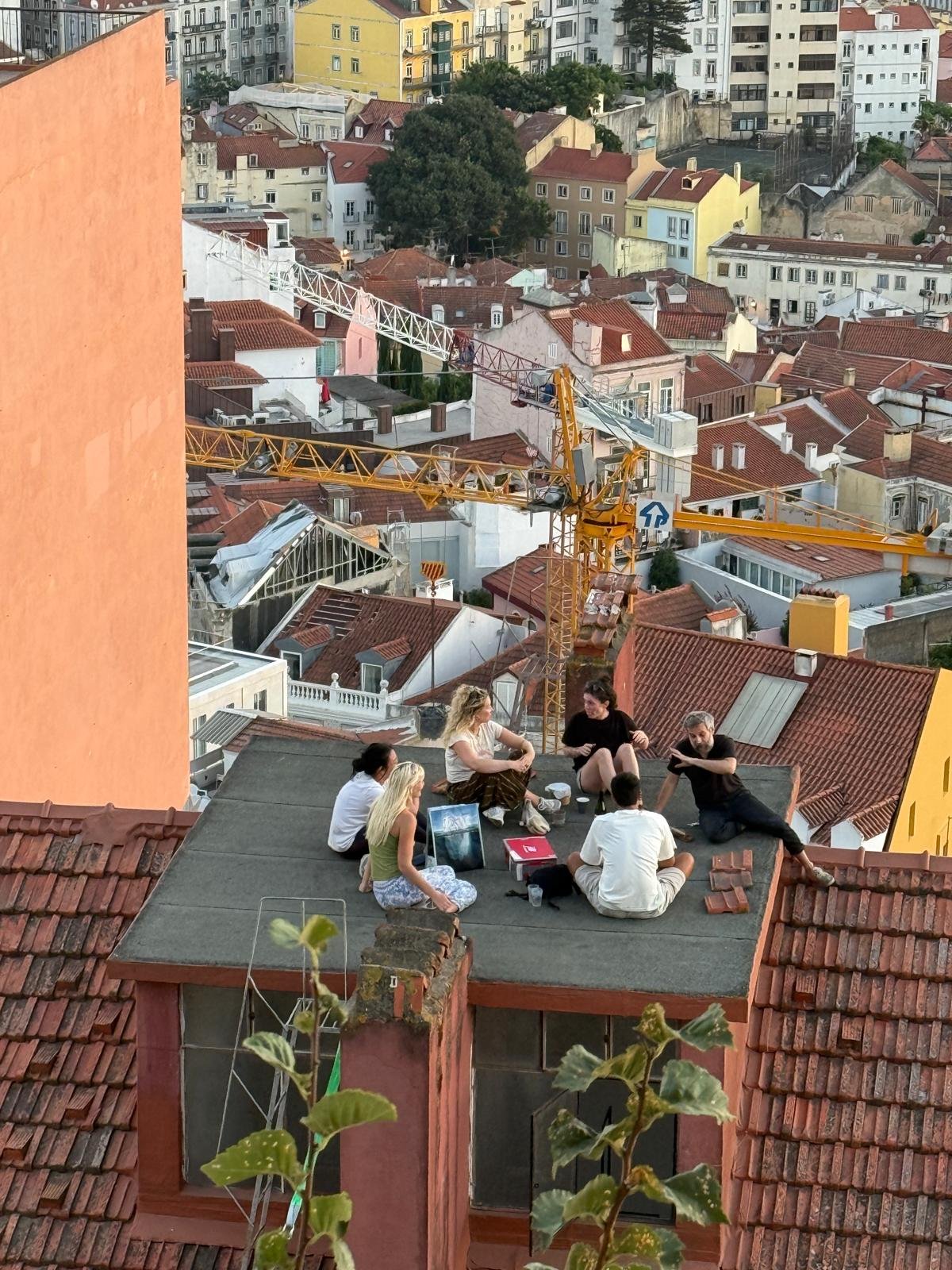
Locals watching the sun partial eclipse in Graca, Lisbon
Traveling deeper with Soul Dreamers
Soul Dreamers creates intimate journeys built around human connection, local culture and positive impact. Our Lisbon experience explores the city through its multicultural communities, stories, food, art and music. We're now bringing the same philosophy into multi-day journeys across Portugal, Morocco and Colombia, co-created with local people and projects. More info soon!
Discover Soul Dreamers: https://www.souldreamers.net/lisbon
