

7-Item Checklist for Planning an Impactful Day in Lisbon
How to experience cultural depth, relaxation, and inspiration in one day without turning Lisbon into a race
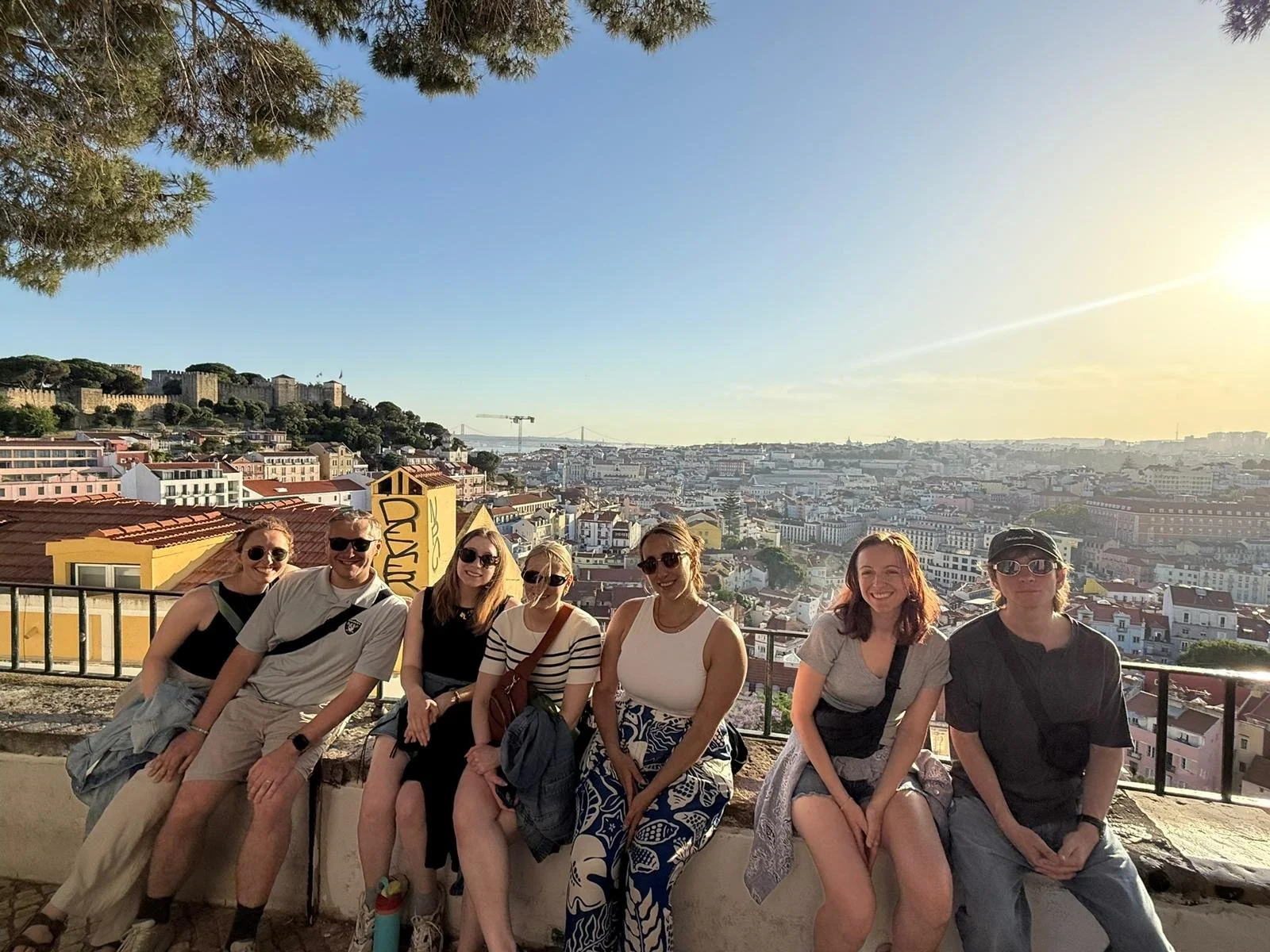
Travelers experiencing a meaningful day in Lisbon with Soul Dreamers
Lisbon can easily tempt you into overplanning. When people realize they have only one day in the city, they often begin collecting places as though they were trying to complete an assignment. Belém must be visited in the morning, Alfama before lunch, Baixa in the afternoon, several viewpoints before sunset, and perhaps a fado performance in the evening. By the end of the day, they may have crossed Lisbon repeatedly, waited in several queues, taken hundreds of photographs, and returned to their accommodation too tired to remember how any of it actually felt.
Yet Lisbon is not a city that reveals itself through speed.
Its most memorable moments often emerge between the places marked on the map: a conversation in a small café, music drifting from an open doorway, a handwritten menu you cannot completely understand, an unexpected view at the end of a steep street, or a neighborhood that slowly changes as you walk through it. These moments cannot always be scheduled, and they rarely happen when you are constantly checking the time.
An impactful day in Lisbon is therefore not about seeing as much as possible. It is about creating a rhythm that allows the city to become more than a collection of attractions. The following seven-point checklist can help you structure your day with enough intention to make it meaningful, while preserving enough freedom for Lisbon to surprise you.
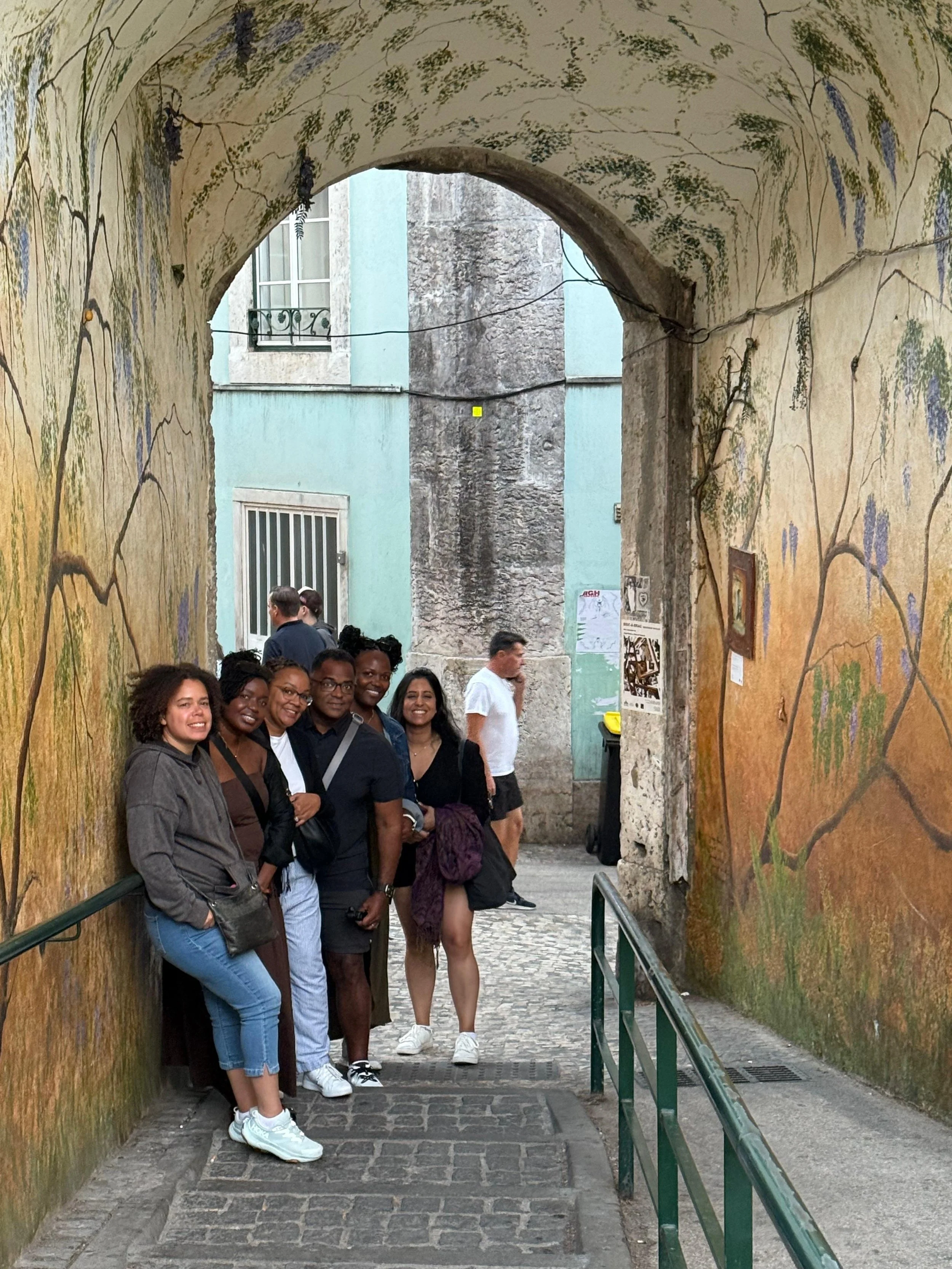
Visitors exploring central Lisbon during a one-day city itinerary
1. Begin with an intention
Before opening a map or deciding which tram to take, it helps to ask a more personal question: how would you like to feel at the end of the day?
Perhaps you want to feel inspired by Lisbon’s creativity. Perhaps you want to understand more about Portuguese history and the communities that have shaped the city. You may be looking for human connection, a sense of calm, an evening filled with music, or simply the feeling that you have stepped outside your normal rhythm.
This intention does not need to be profound. Its purpose is to help you make choices. If you want to feel connected, a locally led experience and an unrushed meal may matter more than visiting three monuments. If you want to feel restored, it may be better to combine one historic neighborhood with a garden, a long lunch, and a quiet sunset rather than spending the entire day moving through crowds.
Most itineraries begin with the question, “What should I see?” A more meaningful itinerary begins with, “What kind of relationship do I want to have with this city today?”
Once you have an answer, use it as a filter. When another attraction, museum, or viewpoint appears tempting, ask whether it contributes to the day you want to experience or simply makes the schedule more crowded.
2. Follow one connected journey through the city
Lisbon is larger and more physically demanding than it sometimes appears in photographs. The hills, stone pavements, crowds, and changes in elevation can turn a seemingly simple itinerary into a tiring sequence of transport connections and rushed arrivals.
This is why a satisfying day is often built around one continuous geographical journey rather than a collection of unrelated highlights.
For a first visit, one possible route could lead gradually from Baixa into Mouraria, then toward Graça and perhaps Alfama. These areas are close enough to connect on foot, but each one reveals a different dimension of the city.
Baixa introduces Lisbon through its broad avenues, symmetrical streets, historic squares, and the reconstruction that followed the devastating earthquake of 1755. From there, Mouraria offers a different atmosphere, shaped by migration, small businesses, multicultural food, street art, changing communities, and the pressures of tourism and gentrification. As the streets rise toward Graça, the city begins to feel more residential. The pace becomes slower, the viewpoints widen, and cafés, gardens, and neighborhood spaces invite you to stay longer.
If your energy remains high, you might continue toward Alfama. Yet you should not feel obliged to do so. The goal is not to collect four neighborhood names. It is to notice how Lisbon changes as one area becomes another.
A connected route creates a narrative. Instead of arriving, looking, and leaving, you begin to understand how architecture, history, migration, commerce, and everyday life exist beside one another.
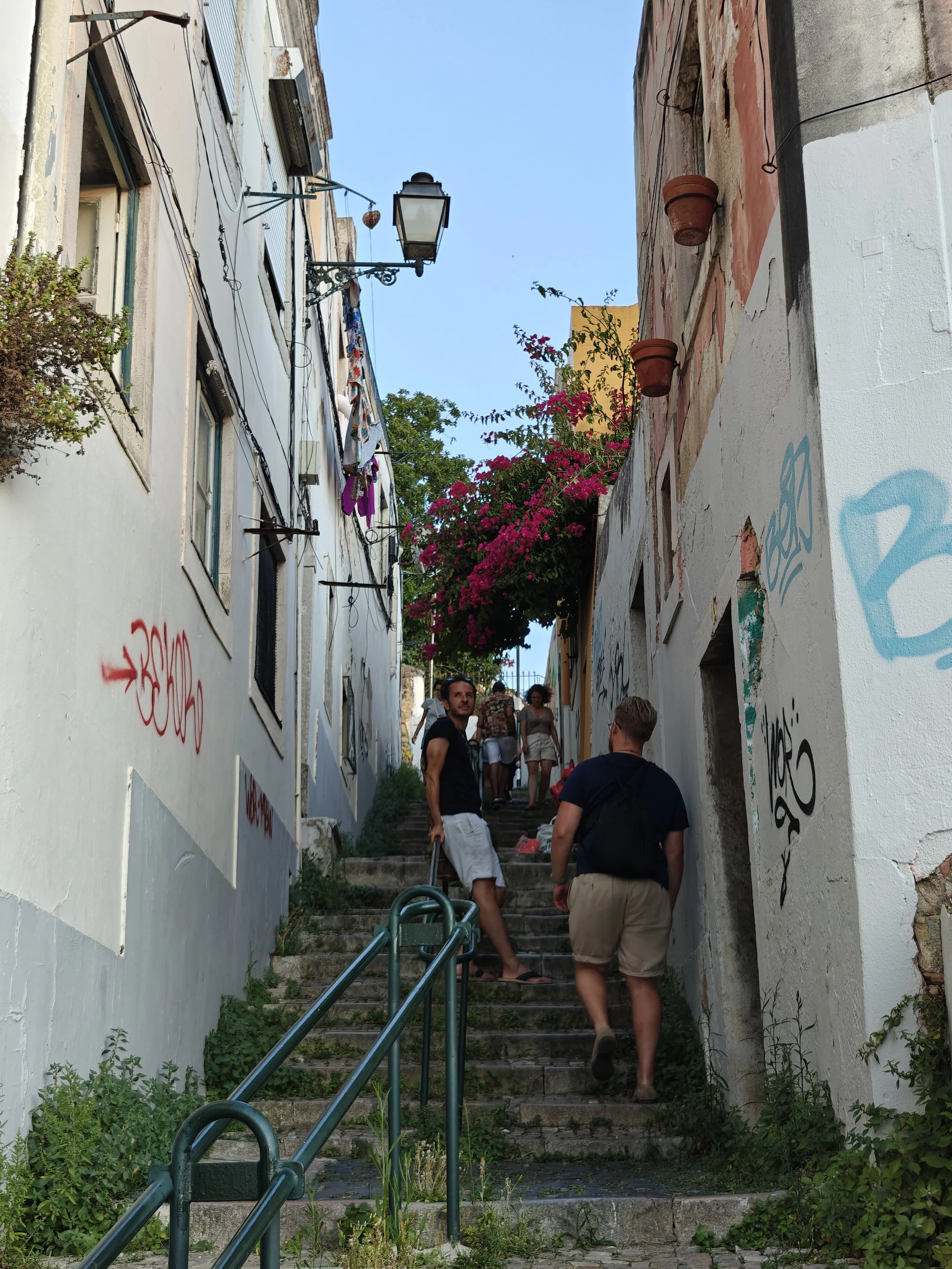
Walking through the multicultural streets of Mouraria in Lisbon
3. Include one experience that gives the city context
Walking through Lisbon can be visually rewarding, but beauty alone does not always explain what you are seeing.
You may pass through Mouraria without understanding why it became one of the city’s most multicultural neighborhoods. You may admire Baixa without realizing how the earthquake transformed Lisbon’s architecture and political imagination. You may hear fado without knowing how its identity developed or how many different communities have contributed to Lisbon’s wider musical landscape.
For this reason, it is worth including at least one experience that helps you interpret the city rather than simply move through it. This could be a locally led cultural walk, a visit to a small museum, a conversation with an artist, a neighborhood project, a food experience, a workshop, or a historical exhibition.
The most valuable experiences do not simply deliver a sequence of facts. They help you notice what would otherwise remain invisible. They may reveal who created a neighborhood, how it has changed, which communities feel represented, which businesses are struggling to survive, and how the city’s celebrated beauty exists alongside displacement, inequality, and resilience.
A good guide or host does not make Lisbon feel scripted. Instead, they help you understand the layers beneath what you are seeing while leaving space for questions, unexpected encounters, and the personality of the group.
This principle is central to the Soul Dreamers experience. The intention is to connect those places through stories of migration, identity, creativity, music, community, and social change, so that Lisbon feels like a living city rather than a polished backdrop.
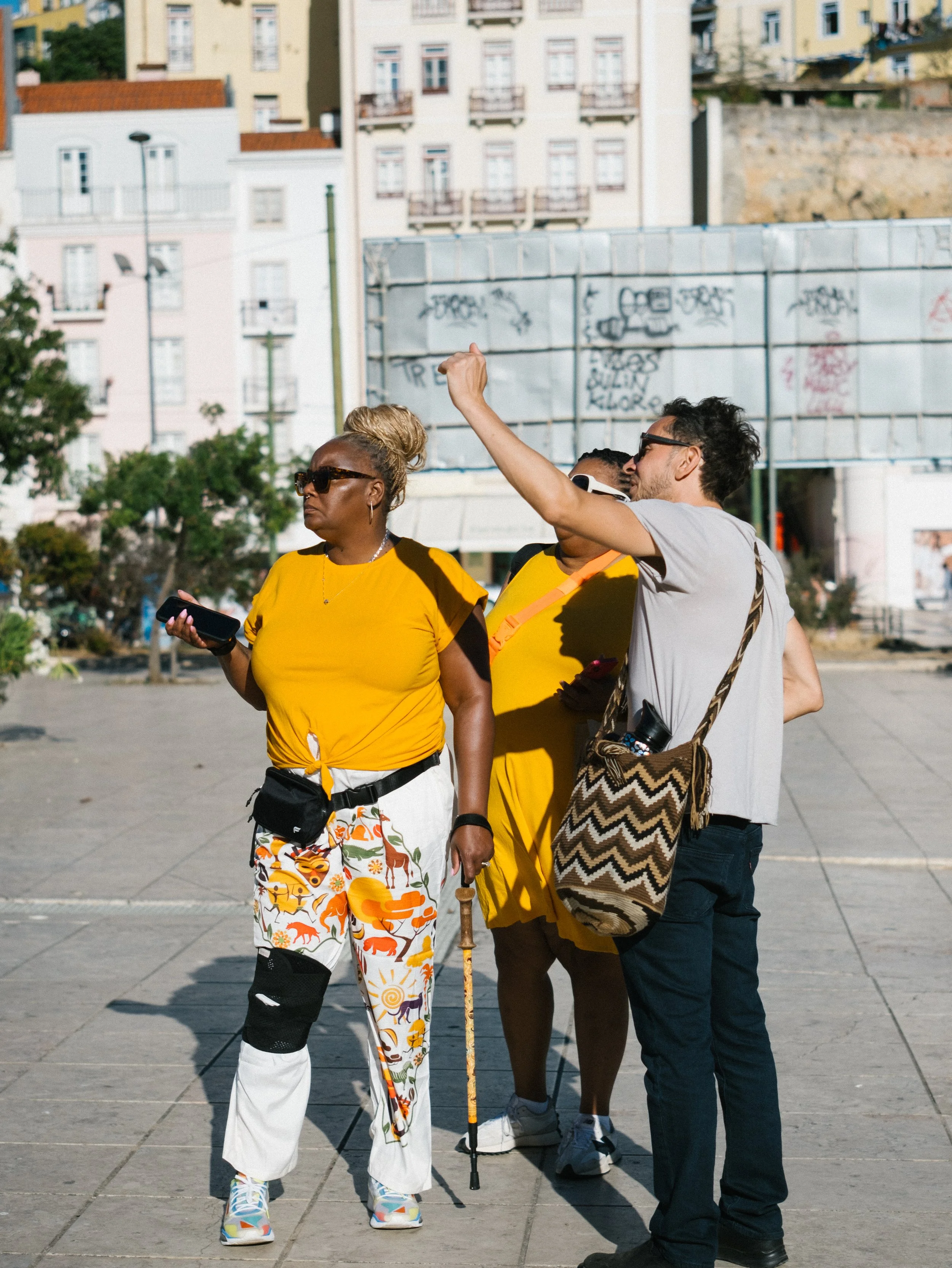
Soul Dreamers cultural experience connecting travelers with Lisbon stories
4. Let one meal become part of the story
Food is often treated as another category to complete during a city break. Visitors are told that they must try a pastel de nata, codfish, sardines, bifana, ginjinha, and several other specialties before leaving Lisbon. There is nothing wrong with enjoying these foods, but tasting a famous item quickly does not necessarily create a meaningful connection with the city.
Instead of filling your day with several rushed food stops, choose one meal that gives you time to sit, observe, and become curious about where you are. A small restaurant, neighborhood café, family business, market stall, or immigrant-run establishment can reveal as much about Lisbon as a monument.
The city’s food culture is not a fixed or isolated tradition. It reflects centuries of movement and exchange involving Portugal, Cape Verde, Angola, Mozambique, Guinea-Bissau, Brazil, Goa, East Timor, South Asia, and many other places. Lisbon’s contemporary identity can be tasted through this mixture of histories, ingredients, and family stories.
A meaningful lunch might introduce you to a dish you have never heard of. It may lead to a conversation with the person serving you, or help you understand how a business became part of the neighborhood. Even when no conversation happens, sitting still for an hour allows you to observe the pace of local life rather than treating food only as fuel between attractions.
The most important meal of the day is not necessarily the most famous one. It is often the meal that gives you time to feel where you are.
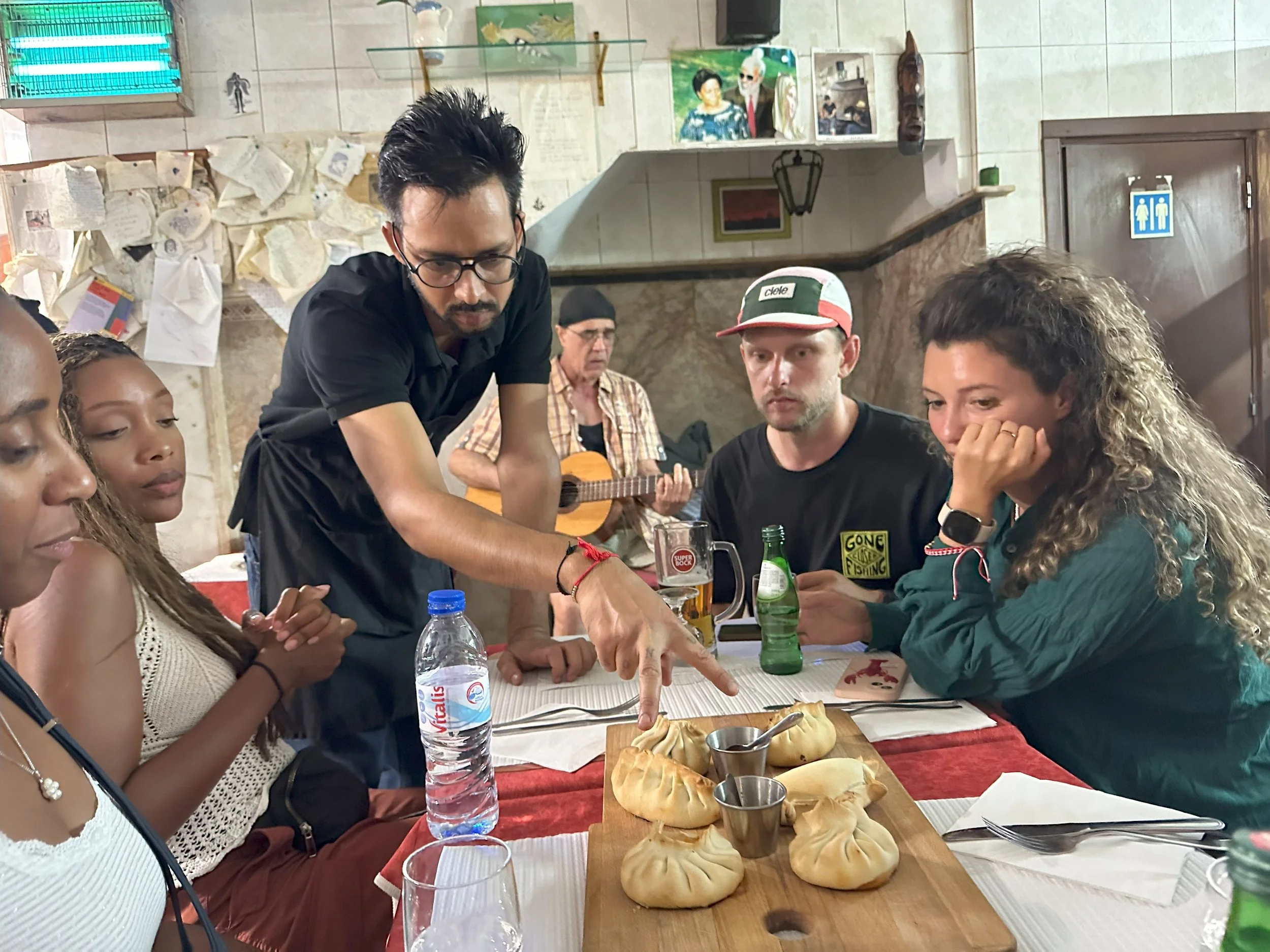
Travelers sharing local food during a cultural experience in Lisbon
5. Protect the pause in the middle of the day
Many visitors treat rest as something that happens only when the body can no longer continue. Yet in a city as stimulating as Lisbon, a pause should be part of the itinerary.
Lisbon asks a great deal from the senses. The light is intense, the pavements require attention, the streets rise and fall, and every neighborhood offers another visual detail worth noticing. After several hours, it is possible to keep walking while becoming gradually less present.
A pause allows the experience to settle.
This might mean sitting in a garden, spending time in a quiet café, resting at a viewpoint, returning briefly to your accommodation, or writing a few lines in a notebook. The exact location is less important than the intention to stop consuming the city for a while.
Try not to spend the entire pause researching what to do next or sorting photographs on your phone. Allow your mind to catch up with your body. You may find yourself remembering a conversation, recognizing a detail you had initially overlooked, or realizing that one neighborhood affected you more deeply than expected.
This is also a useful moment to adjust the rest of the day. You may decide that you no longer need another museum. You may want to spend more time in the area where you already are, or replace a complicated evening plan with something quieter.
An itinerary should serve your experience. It should never become an obligation you continue following after it has stopped bringing you joy.
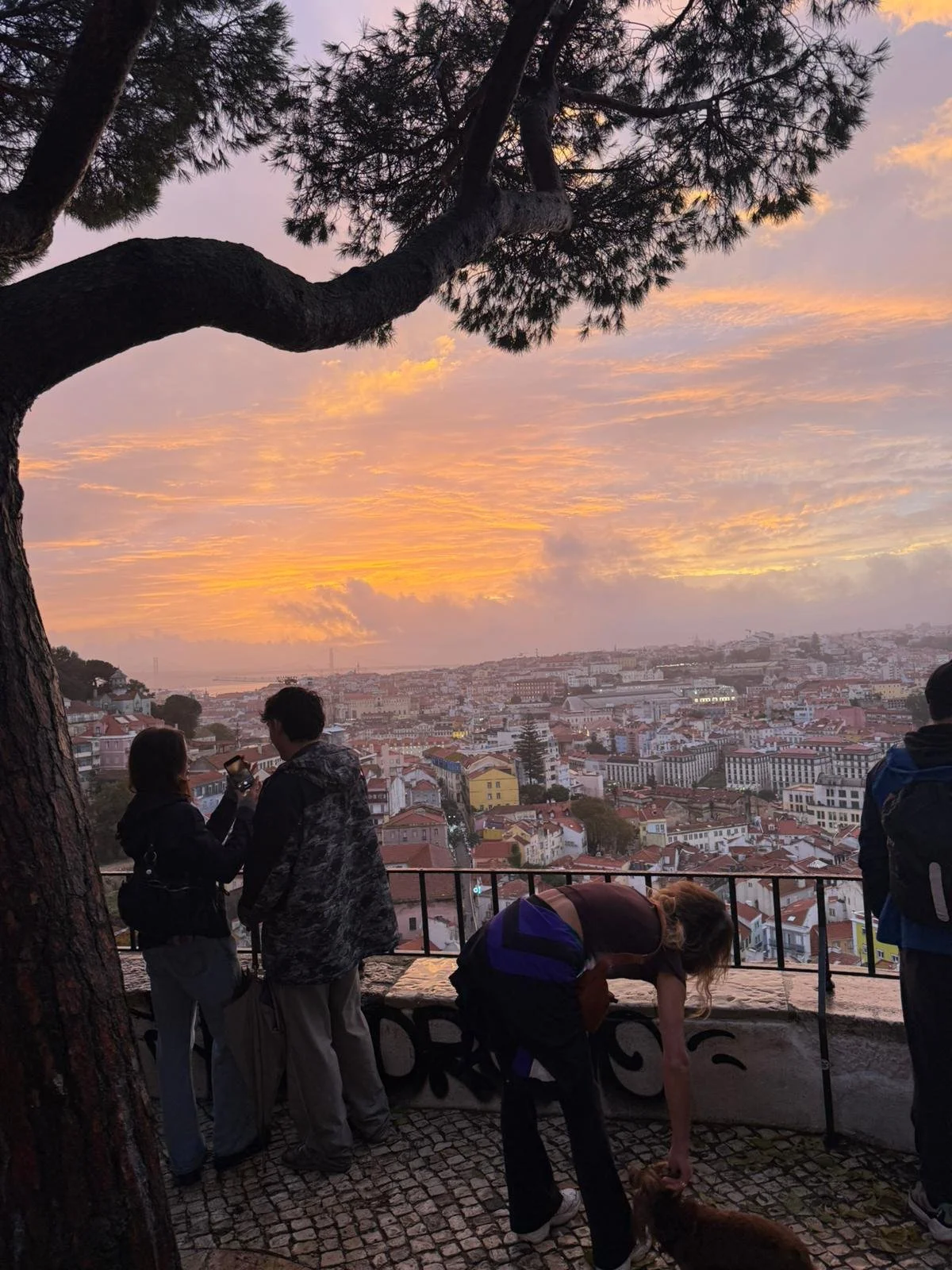
A quiet pause overlooking Lisbon during a slow travel itinerary
6. Leave enough space for Lisbon to answer back
A completely planned day may feel efficient, but it leaves very little room for discovery.
Lisbon often offers its best moments without announcing them in advance. You may encounter live music in a square, see a sign for a small exhibition, receive a recommendation from someone you meet, discover a beautiful street that leads away from your intended route, or find a café where you suddenly want to stay much longer.
These moments require time that has not already been assigned to something else.
A useful approach is to plan around 70 or 80 percent of the day, while leaving several hours open. The structure gives you confidence, but the empty space allows you to respond to the city as it unfolds.
This does not mean wandering without awareness or abandoning everything you hoped to experience. It simply means accepting that a meaningful journey cannot be completely predicted.
Perhaps you follow a recommendation to a small music venue. Perhaps you remain at a viewpoint as the light changes. Perhaps a conversation lasts longer than expected. You may find a gallery, a community event, a local bookshop, or a quiet street that does not appear in any travel guide.
Spontaneity is the space that good planning deliberately protects.
7. Give the day an intentional ending
The final part of a day often determines how the entire experience is remembered.
After many hours of walking, visitors sometimes finish by entering the nearest available restaurant or returning to their accommodation completely depleted. Yet an ending does not need to be complicated to feel meaningful. It simply needs to be chosen with care.
Lisbon offers many ways to close the day. You could watch the sunset from a viewpoint, walk beside the river, listen to live music, share a long dinner, or sit somewhere quiet and talk about what surprised you. The choice should reflect the intention you established in the morning.
A sunset can provide a sense of stillness, but it does not need to happen at the busiest viewpoint. Sometimes a less famous place gives you more opportunity to experience the light instead of competing for a photograph.
Music can offer another kind of conclusion. Lisbon’s soundscape extends far beyond one genre. Fado remains deeply important, but the city also lives through Cape Verdean morna and funaná, Brazilian rhythms, Angolan music, jazz, electronic scenes, and countless contemporary mixtures. A small venue where musicians and audiences share the same intimate space may reveal more about the city than a polished performance designed exclusively for visitors.
Before the day ends, take a moment to consider what Lisbon gave you and what your presence supported. Which story will remain with you? Which person, business, or neighborhood benefited from your choices? Did you move through the city only as a consumer, or did you listen, participate, and pay attention?
Impactful travel is about the relationships, businesses, and versions of a city that our attention and spending help sustain.
A possible rhythm for one meaningful day in Lisbon
Imagine the day as a sequence of changing energies.
You might begin slowly with breakfast near your accommodation, taking a moment to decide how you want the day to feel. From there, you could enter Baixa and spend the morning understanding the more formal, historic face of Lisbon through its squares, streets, and architecture.
As the morning continues, you could walk toward Mouraria and allow the atmosphere to change. This would be a natural moment to join a locally led experience or spend time learning about the neighborhood’s migration histories, street art, music, businesses, and changing identity.
Lunch could become a genuine pause. Instead of searching for the most famous restaurant, you might choose a smaller place that reflects the neighborhood and order something recommended by the people who work there.
The middle of the afternoon could remain deliberately quiet. A café, garden, or viewpoint would give you time to rest and decide what kind of energy remains.
Later, you might continue toward Graça without a rigid schedule. A small shop, church, community space, street-art work, or unexpected conversation could become the next part of the journey.
As sunset approaches, choose a place where you can stop moving. Allow the city’s light, sounds, and scale to become the focus.
The evening may then lead naturally toward dinner or live music. It does not need to contain another major attraction. Its purpose is to give the day an emotional conclusion.
This rhythm through arrival, exploration, understanding, nourishment, rest, spontaneity, and reflection creates a fuller experience than a list of ten disconnected places.
What to remove from a one-day itinerary
Planning an impactful day is partly an exercise in choosing what matters. It is also an exercise in letting go.
You probably do not need to visit more than three major neighborhoods. You do not need several long queues, multiple journeys across the city, five famous viewpoints, or every food someone told you was essential.
You also do not need to force Belém, Alfama, Mouraria, Baixa, Parque das Nações, LX Factory, and Bairro Alto into the same day. Each of these places deserves more attention than a hurried arrival and a photograph.
A one-day itinerary should not attempt to compensate for the fact that you cannot stay longer. It should create one coherent, honest encounter with Lisbon.
It is better to leave curious about what remains than to leave exhausted by everything you tried to complete.
What makes a day genuinely impactful?
An impactful day does not need to contain a dramatic revelation.
It may simply leave you with a deeper question than the one you arrived with. You may understand one neighborhood more clearly, remember the name of a musician, discover how migration shaped the city, or realize how tourism influences the survival of local businesses.
You may have one unexpected conversation. You may participate in something instead of merely watching it. You may recognize that resting in a public square can be as meaningful as entering another museum.
Transformation often begins in these small adjustments of attention.
Lisbon does not need to be conquered, completed, or discovered. It is already a living city filled with people, contradictions, memories, and constant change. What it can offer you is the opportunity to enter that life briefly and respectfully.
The most meaningful travel happens when we allow beauty and complexity to exist together. Lisbon can be charming, joyful, musical, and visually extraordinary while also being shaped by displacement, inequality, migration, resilience, and reinvention.
A day becomes impactful when it makes room for all of these realities and allows you to leave with a more human understanding of the place.
Your seven-item Lisbon checklist
Before finalizing your itinerary, ask whether the day includes an emotional intention, a connected route through one part of the city, an experience that gives you cultural context, an unrushed meal, a genuine pause, some unplanned time, and an intentional ending.
You do not need dozens of stops. You need enough time and attention to experience the places you choose.
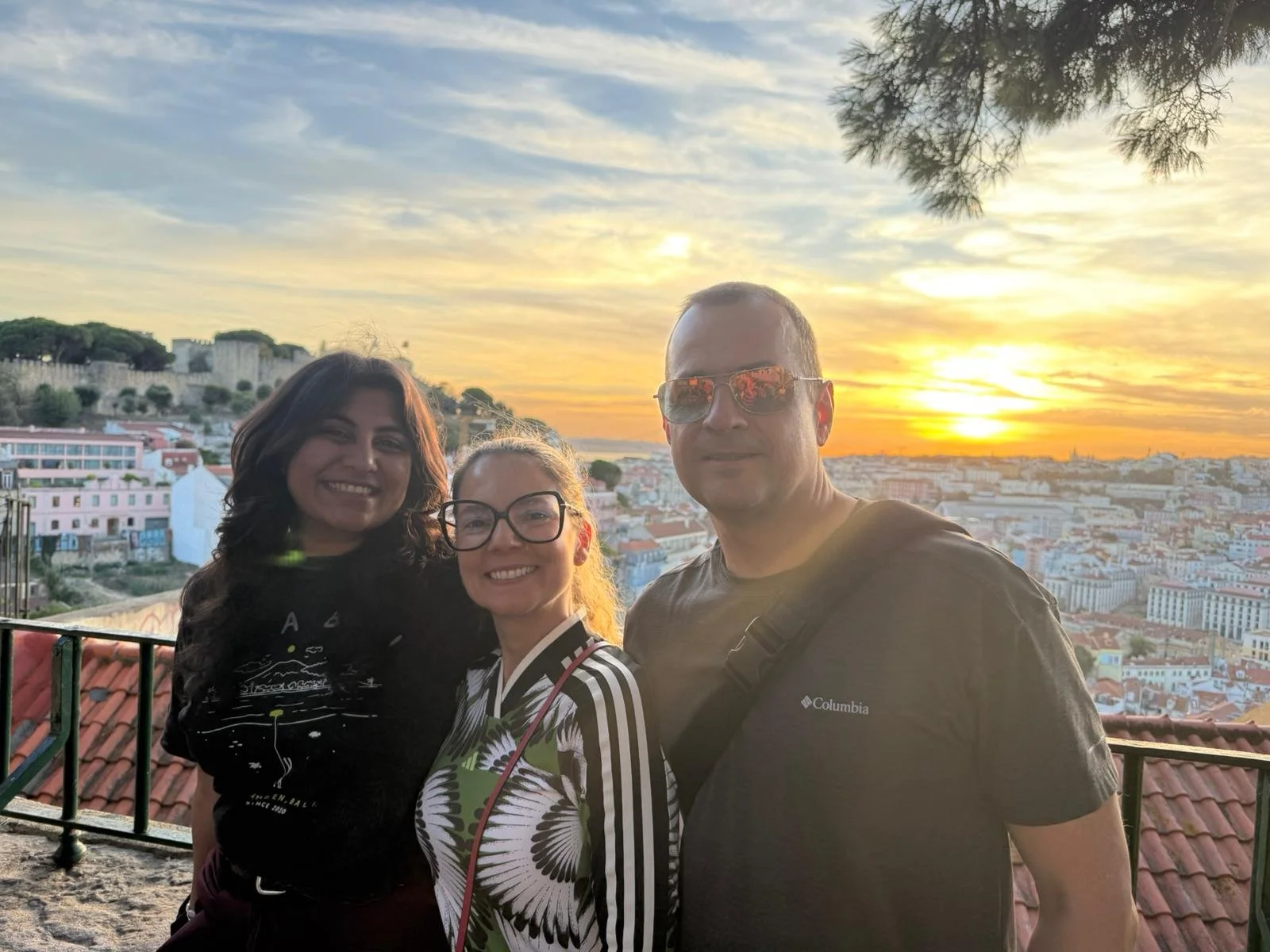
Soul Dreamers guests ending a meaningful day in Lisbon at sunset
Discover Lisbon beyond the checklist
Soul Dreamers creates immersive journeys through Lisbon’s multicultural neighborhoods, local gastronomy, migration histories, street art, music, and community life. The experience is designed for travelers who want to go beyond sightseeing and understand the city through the people and stories shaping it today.
Explore the Soul Dreamers Lisbon experience:
https://www.souldreamers.net/lisbon
Read more stories and reflections:
https://www.souldreamers.net/blog
Read our TripAdvisor reviews:
https://www.tripadvisor.com/Attraction_Review-g189158-d26268989-Reviews-Soul_Dreamers_Cultural_Tours-Lisbon_Lisbon_District_Central_Portugal.html
View the Airbnb experience:
https://www.airbnb.com/experiences/108932
