

The Definitive Guide to Lisbon’s Multicultural History (That You Won’t Find in Guidebooks)
Lisbon doesn’t reveal itself all at once.
It’s not a city that explains itself through monuments or timelines. It whispers instead in stairways worn smooth by centuries of feet, in taverns where songs carry more memory than melody, in neighbourhoods where accents change every two streets.
Most guides will tell you Lisbon is about trams, viewpoints, and pastel de nata.
They’re not wrong.
But they’re not telling you why this city feels the way it does.
This is a different kind of guide.
Rather than bringing you a checklist, we’re entering a backstory.
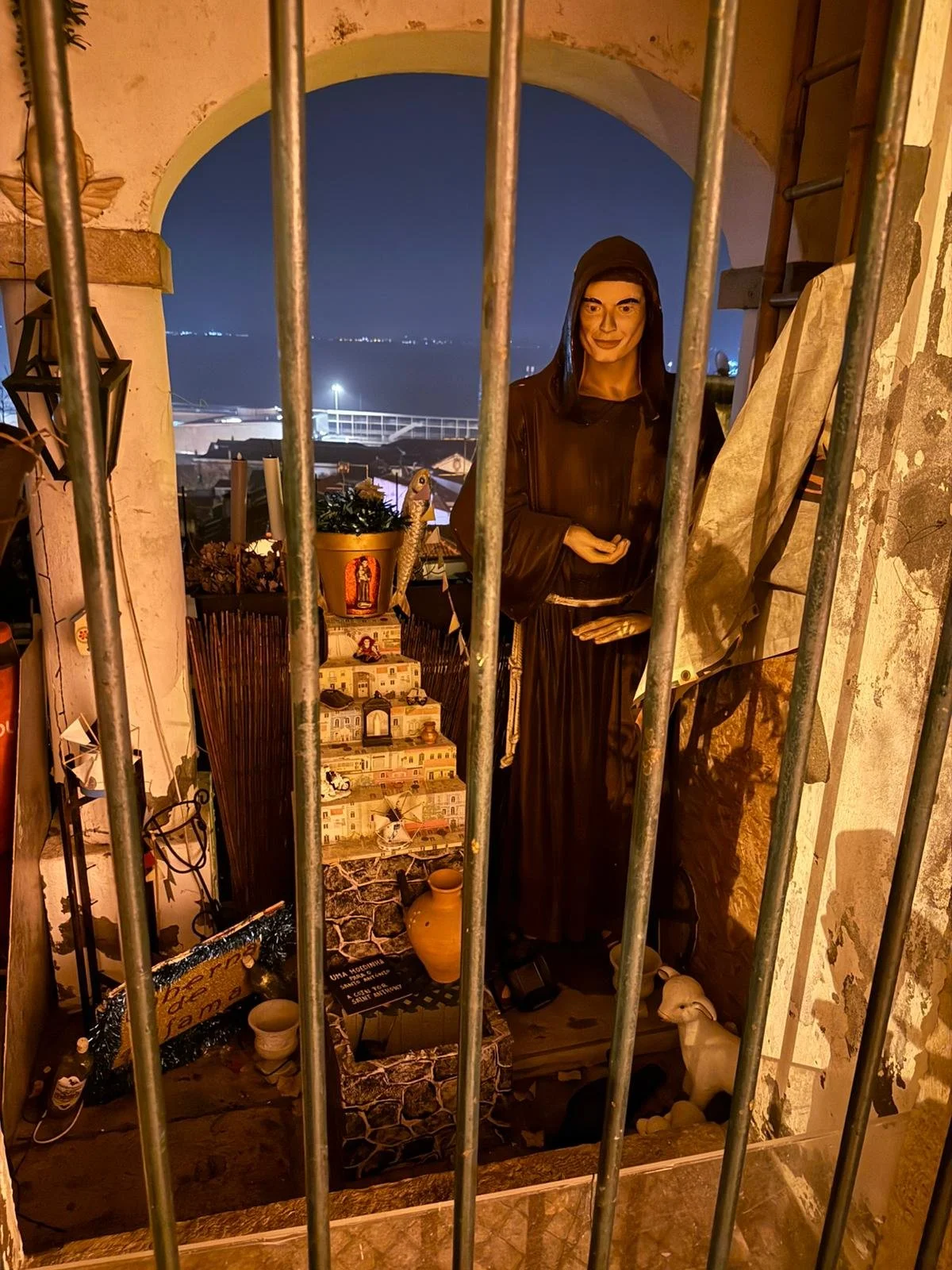
A Journey into Lisbon’s History in Alfama, Lisbon.
Before Lisbon Was “European”
Long before Portugal existed as a nation, Lisbon was already multicultural.
Phoenicians traded here. Romans built here. Visigoths ruled briefly. And then, for nearly four centuries, Lisbon was part of the Islamic world known as Al-Ushbuna.
This matters more than most people realize.
The winding streets of Alfama and Mouraria aren’t “picturesque” by accident. They follow North African and Middle Eastern urban logic: narrow lanes for shade, communal courtyards, neighbourhoods designed for proximity and shared life.
Even today, when you get lost in these areas, you’re walking through a city designed not for an Instagram instant spectacle on display, but for actual living.
Mouraria: Where Lisbon Learnt to Sing
If Lisbon has a soul, it learned how to express it in Mouraria.
This was historically a marginalized neighbourhood, and a home to Muslims after the Christian reconquest, later to sailors, dock workers, Romani families, and the poor. It was never polished. Never elite.
And yet, this is where fado was born.
Fado didn’t come from concert halls. It came from taverns, brothels, kitchens, and late nights. It absorbed African rhythms brought by enslaved people, Brazilian influences from returning sailors, and Portuguese melancholy shaped by loss and longing.
When people say fado is about saudade, they often translate it as nostalgia.
That’s not quite right.
Saudade is what happens when cultures mix, people leave, people stay, and nothing ever fully belongs to just one place anymore. Its ephemeral transformative condition dictates its depth in tone.
The Atlantic City
Lisbon has always faced outward.
The so-called “Age of Discoveries” brought wealth, but also violence, exploitation, and displacement. Enslaved Africans were brought into the city in large numbers; so many, in fact, that by the 16th century, Lisbon was one of Europe’s most African cities, and its largest slave port.
This history is rarely foregrounded. But you can still feel it in music, in food, in language, in the rhythms of everyday life.
Later came returnees from Brazil, migrants from Cape Verde, Angola, Mozambique, Guinea-Bissau, São Tomé. More recently: Bangladesh, India, China, Nepal, Brazil (again), France, Italy, Germany.
Lisbon didn’t become multicultural recently.
It has been practicing coexistence for centuries, imperfectly, painfully, and beautifully.
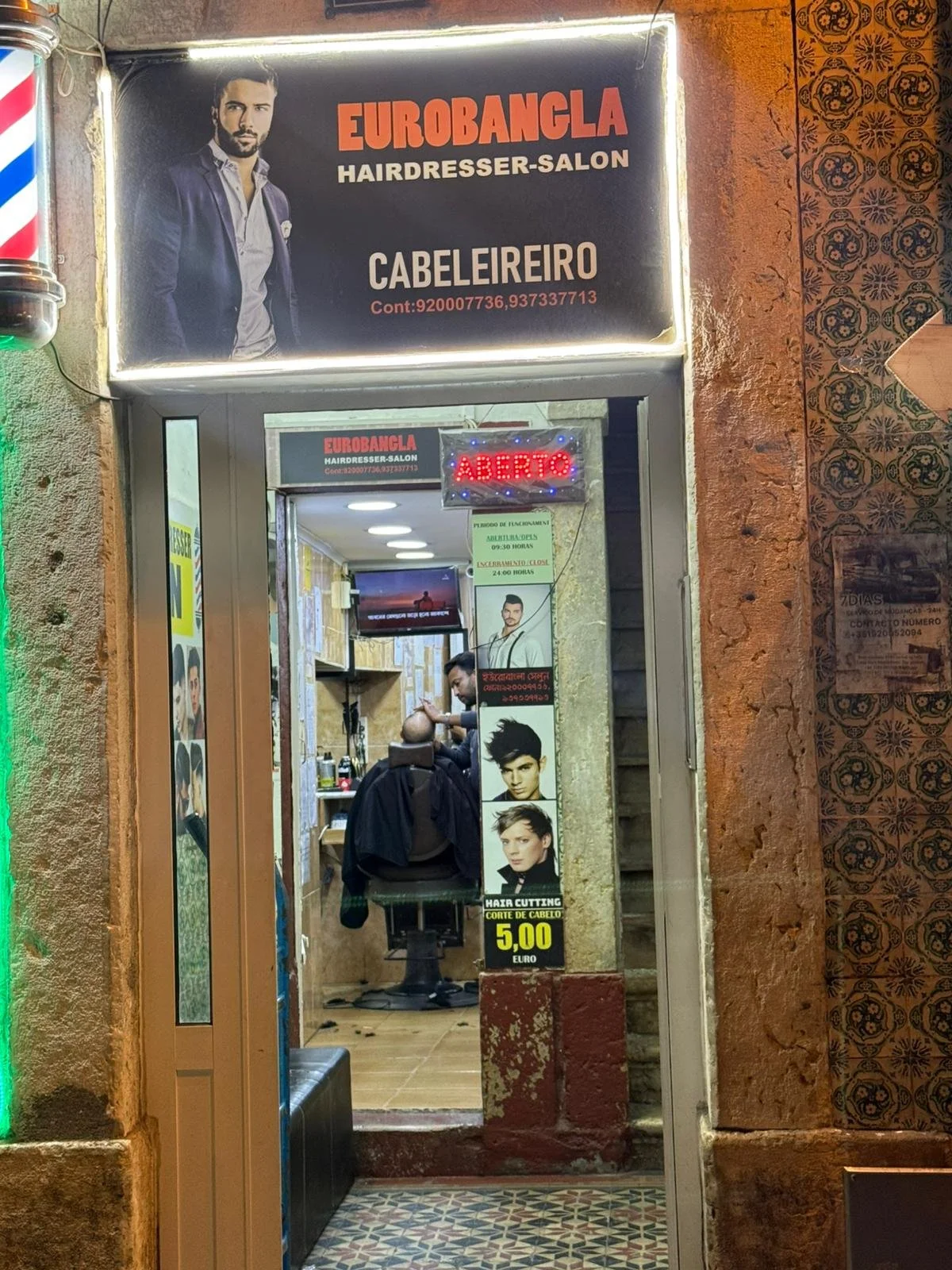
Bangladeshi Barber Shop in Rua Formosa, Lisbon
A City of Arrivals (and Re-Arrivals)
What makes Lisbon different is it’s layering.
New communities don’t erase old ones but they sit on top of them. A Cape Verdean café next to a 300-year-old tasca. A Bangladeshi grocery under a medieval arch. A Brazilian singer performing in a former convent.
This is why Lisbon feels intimate, even as it changes.
It’s also why the city resists being reduced to highlights. You don’t understand Lisbon by ticking boxes. You understand it by listening.
Why This Matters (Especially Now)
Lisbon is changing fast.
Tourism, gentrification, and global capital are reshaping neighbourhoods that once survived on resilience and community. Some stories are being polished away. Others are being romanticised without being understood.
To really experience Lisbon today is vital to witness it through all its emotions and flavours.
To know that when you hear live music drifting from a hidden courtyard, it carries echoes of migration.
That when you share food at a small table, the recipes likely crossed oceans.
That when you walk uphill at sunset, you’re tracing paths used by many cultures long before you arrived.
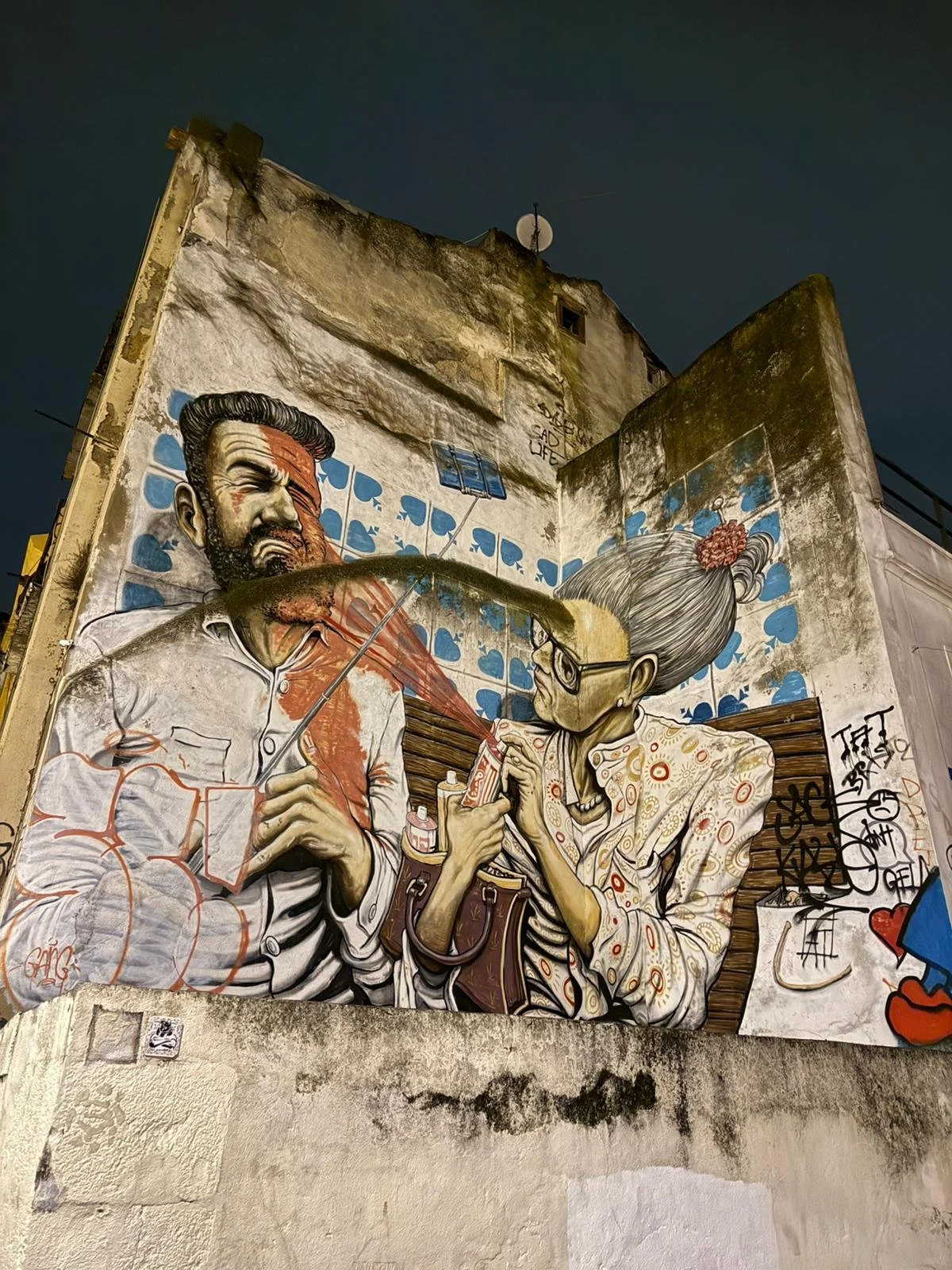
Mural in Mouraria, Lisbon
The Lisbon That Stays With You
This is the Lisbon that doesn’t fit neatly into guidebooks.
A city shaped by movement, loss, mixing, resilience, and creativity. A city that doesn’t ask you to admire it but to fully engage with it.
If you let it, Lisbon will slow you down.
It will ask you to pay attention.
And it might even change how you understand cities, and yourself.
—
This article is part of the Ultimate Guide Series by Soul Dreamers created for travelers who want to FEEL the cities they visit.
Reserve your Soul Dreamers experience here: www.souldreamers.net/lisbon
Join the Lisbon Secrets Collective news here: https://www.facebook.com/groups/lisbonsecrets
Follow us on Instagram: souldreamersdream, and souldreamerslisbon
TikTok: souldreamerslisbon
