

Pukarita - Sacred Art & Healing. When Feminine Lineage becomes Medicine.
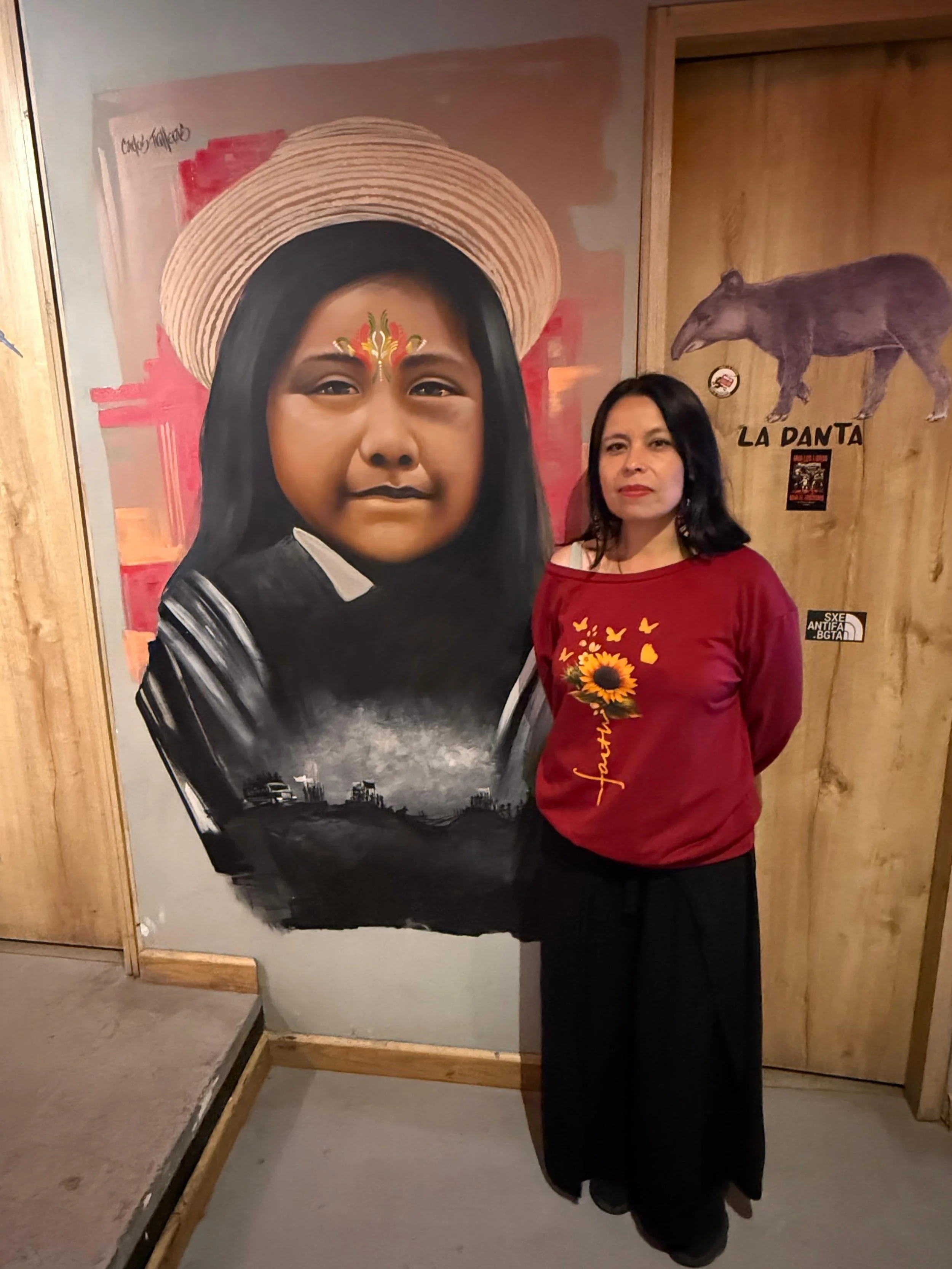
Some stories are witnessed and shared because someone survived something intimate and profound, and chose to turn it into an offering.
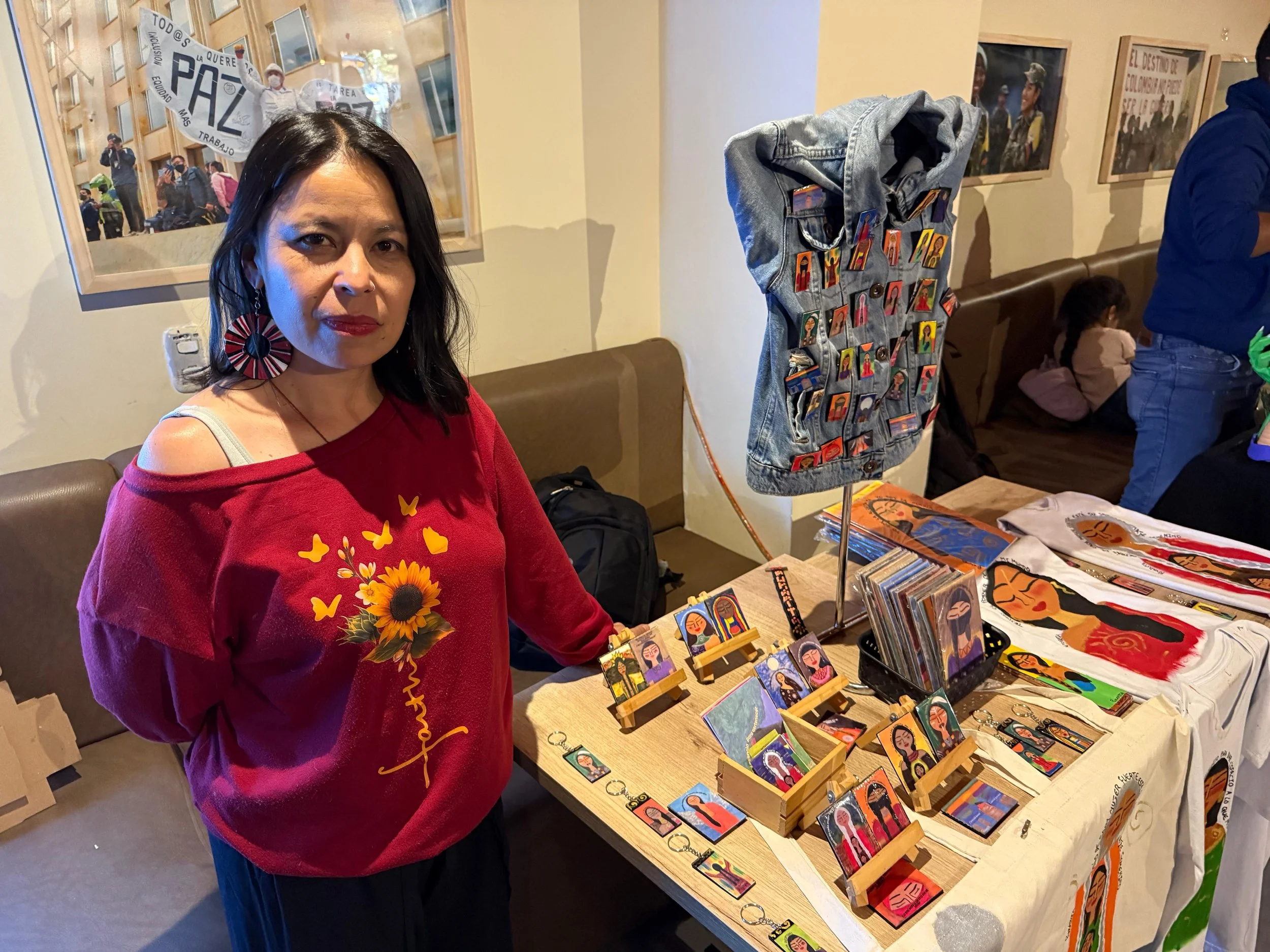
I met Claudia in Bogotá at an art fair. It wasn’t a typical loud encounter. It was the kind that happens in silence: first you notice the colors, then the eyes in her painted women, and then you feel the symbolic weight behind them. Her table was filled with feminine faces, indigenous markings, intense tones, and a presence that was hard to ignore.
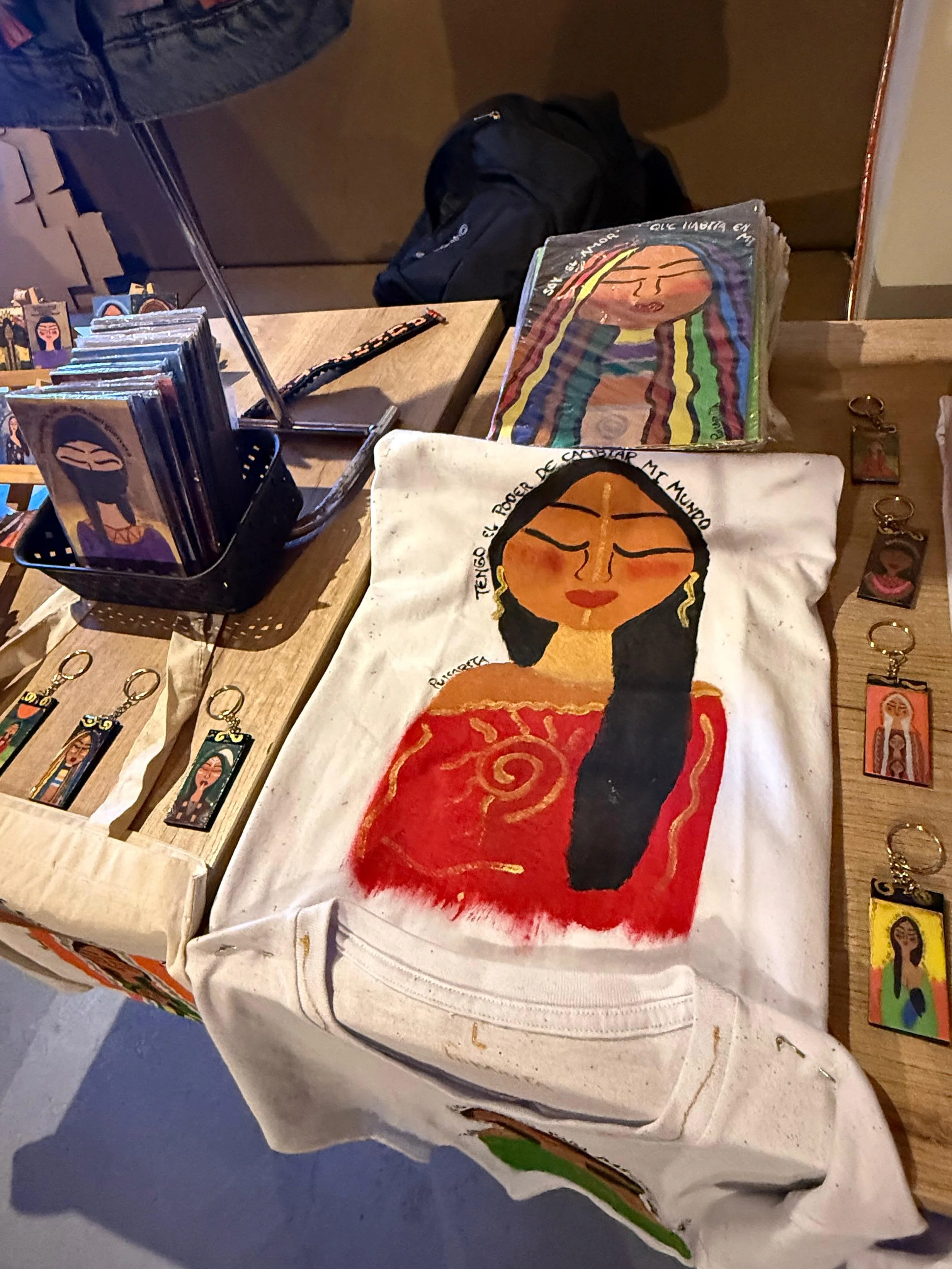
Claudia paints sacred women beyond aesthetics as an act of memory, lineage, and strength.
“My grandmother raised me… she taught me from a very young age to respect Indigenous communities… and she inspired me to make Indigenous women visible through my art.”
A matriarchy living inside her
Her story begins the way many stories of ancestral medicine begin: with a grandmother.
Claudia speaks about her lineage as a quiet current running beneath everything: a great-grandmother who painted, a grandmother who was an artisan, a mother who also painted. She describes it as an inevitable calling.
“I felt I had to have that connection too… to continue that craft inspired by our ancestors.”
When I ask her about symbols, her answer is embodied.
“Almost all of them have red… for the Embera Katío it means menstrual blood… through that blood they become empowered… it cleans your lineage.”
Her colors are bold in red, orange, green, fuchsia because in her worldview, color is protection.
When the body screams the tone shifts.
Claudia shares that she sought conventional medical care due to strong symptoms. After painful exams, she received a diagnosis: uterine cancer. She was offered chemotherapy, radiation, even the possibility of a hysterectomy.
But the most honest part of her story is what she felt before she could choose:
“I was depressed… I said: I’ve come this far. I’m exhausted. I want to rest.”
There’s a moment when in illness the spirit gets tired too. Claudia doesn’t romanticize that. She tells it plainly.
And then something changed as so many transformation stories do through a single unexpected sentence, a human mirror. A client who later became her friend told her, without knowing about the diagnosis:
“Your mission is to heal women through your art.”
Claudia describes it as a turning point. Fro that moment, women began arriving aka “broken women,” in her words who felt relief and strength through her paintings. She then understood the purpose.
“That’s my mission… I have to finish it.”
Healing as a network
What follows is a human chain.
Claudia tried chemo, but her body reacted badly. She felt real danger; through a loss of mobility, her left leg weakened, and then a brutal question surfaced:
“I paint with my left hand… I’m going to lose what I came here to do.”
So she began searching for other paths. And as if the world responded to her inner decision as it normally happens, people arrived: a botany student/herbalist who brought her tea and plants, women who offered Reiki, drops and herbal support and weekly care. An African healer specialized in the womb. Another woman in Cabo Verde who guided rituals, cleansing practices, and even songs via video call.
“It was as if the universe sent me everything.”
Later she connected with “grandmothers” from her Embera Katío community. She spent a week with them: diet and fasting, songs, womb massage, ritual. And later still, she traveled to the sacred lands of Putumayo (Valle de Sibundoy) for a yagé ceremony (ayahuasca) in an Indigenous setting with a Taita.
In that ceremony, she was told something that became central to her personal meaning-making:
“There was a lineage of betrayal… accumulated in the womb.”
Whether someone understands this as spiritual, symbolic, or psychological, what matters is that Claudia experienced it as an inner truth that needed transformation. After that process, she describes a strong physical shift. In a later medical check, she says the cysts and tumor were no longer there.
(I’m sharing this as her personal testimony.)
“You give your body an order”
When I ask what she learned, she answers with a clarity shaped by lived experience:
“You give your body an order. You have to empower yourself… to decide: I don’t want to get sick… I will heal in my own way.”
Her language is strong, and definitely not polite nor hesitant. It’s the voice of someone reclaiming her life. And in her world, empowerment becomes a message for others.
Art as medicine
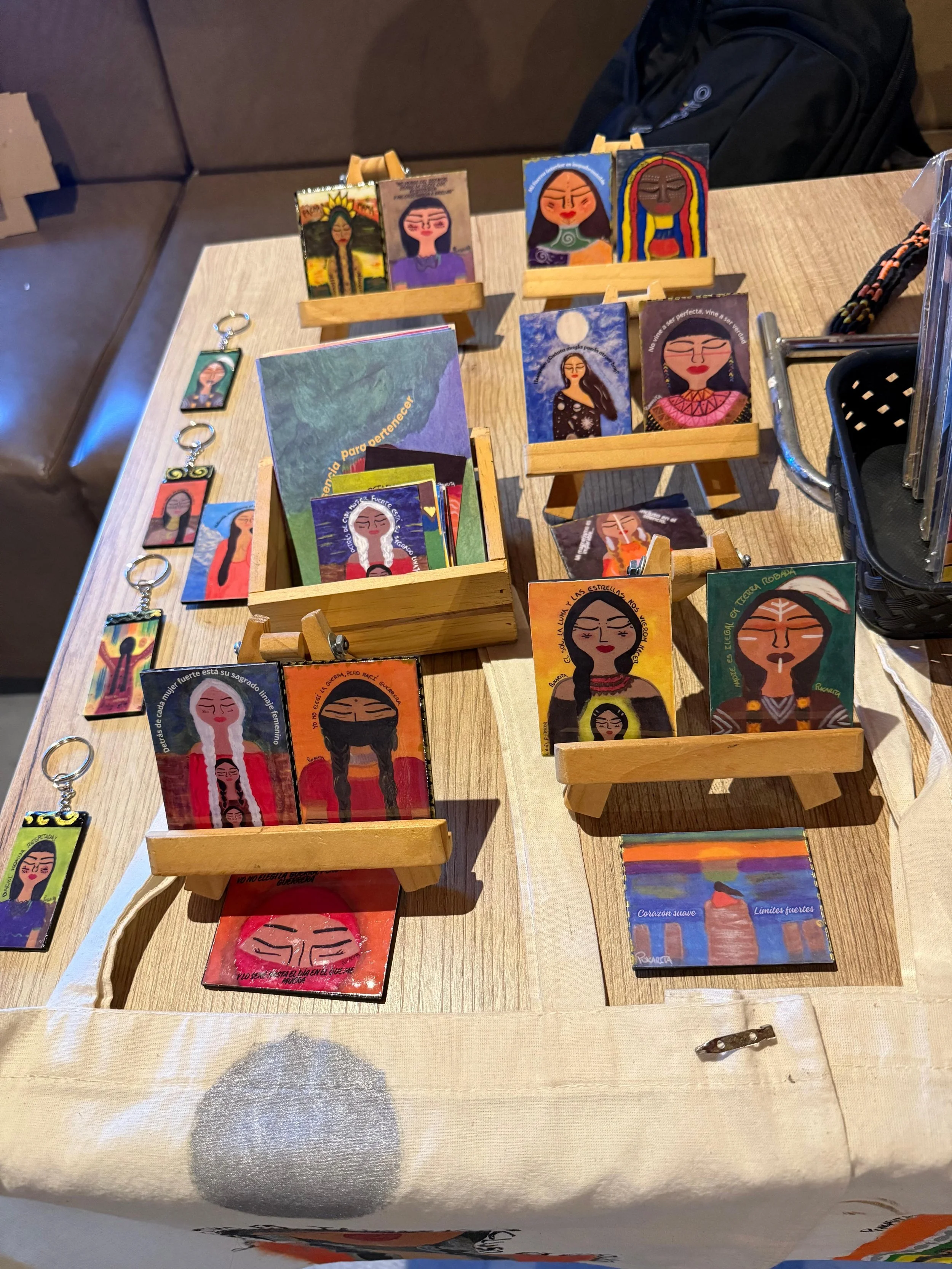
Claudia doesn’t claim her art “cures.” She says something subtler, and, honestly, more powerful: that it strengthens, it accompanies, and reminds.
“My art gives strength… I place phrases on it… that they’re not alone… that the universe accompanies them… that Mother Earth accompanies them.”
One piece she loves is Mother Earth. She explains that in Embera Katío healing processes, facial/body painting changes, and she paints those markings as a bridge between art and ancestral medicine.
And then there’s the artwork that holds her whole story: Healing.
A woman moving through transformation in three acts, almost like stations of the soul:
• Black: symbolic death of the illness
• Red: blood, lineage, strength, empowerment
• White: a declaration of purity, cleansing, rebirth
“That’s me… inspired by my healing.”
“Bravery, show me the size of my wings”
Before we end, I ask what she wants to tell the world. Claudia doesn’t hesitate:
“Be brave… to fulfill a mission… Bravery, show me the size of my wings.”
And maybe that’s what her story leaves with us: that healing sometimes arrives as an inner decision, as a network of care, and as a piece of art that whispers each morning: I’m still here!
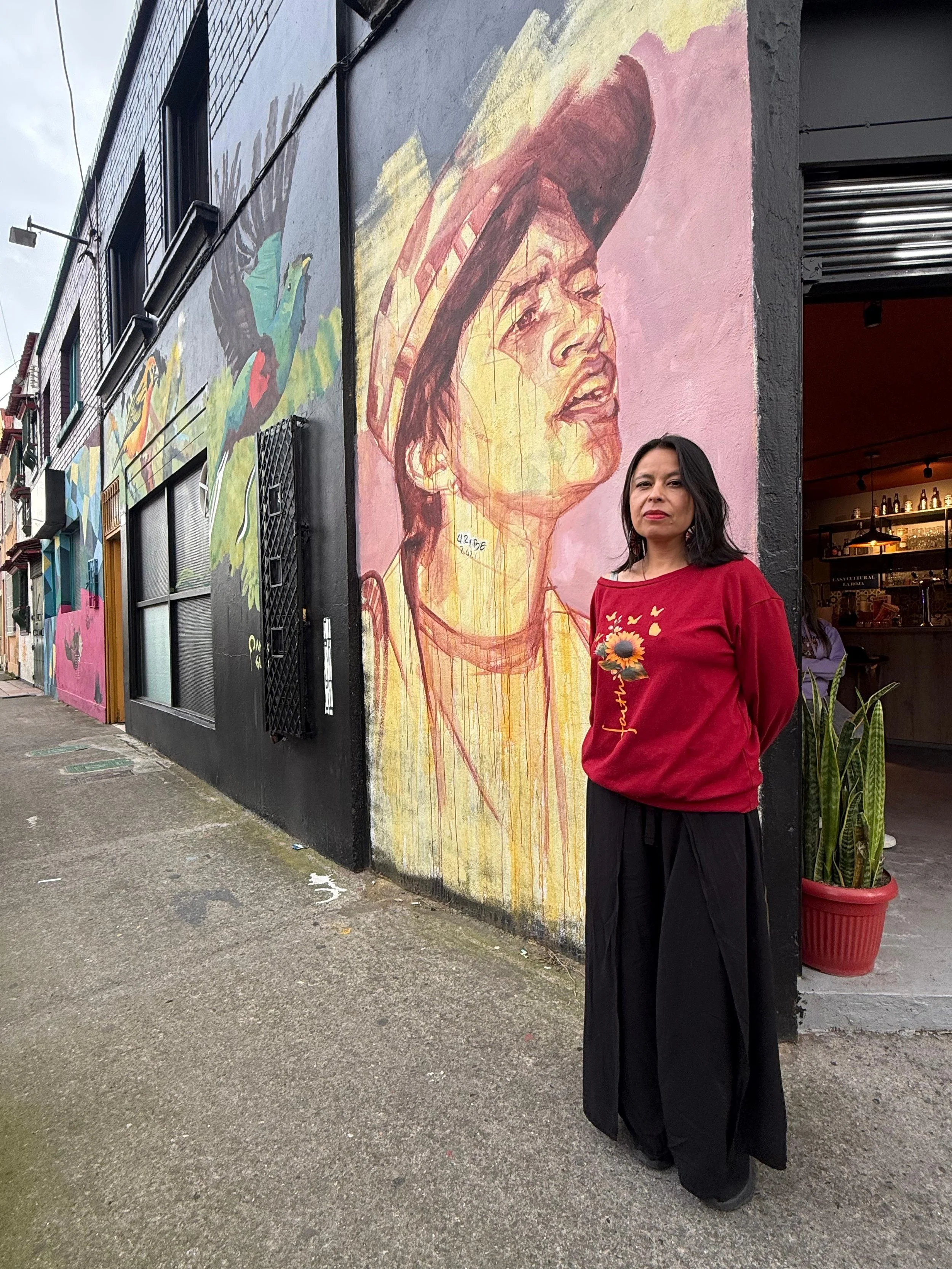
Why Claudia’s story lives on Soul Dreamers
Soul Dreamers began in Lisbon yet it was never only about one city. It’s a way of traveling and living that seeks the people who protect something sacred: a neighborhood, a home, a lineage, an art form, a memory.
Claudia is one of those people. Her story is about resilience, yes but also about devotion: the devotion to keep creating even when the body is breaking, to turn pain into language, to make art into an altar.
And that’s why this story belongs here. Because Soul Dreamers is also this: traveling to remember who we are, and listening to the people who are quietly healing the world without making a spectacle of it.
Find Claudia
Claudia Pukarita - Sacred Art & Ancestral Medicine
