

Lisbon After Dark: What Music and Dance Reveal About the City
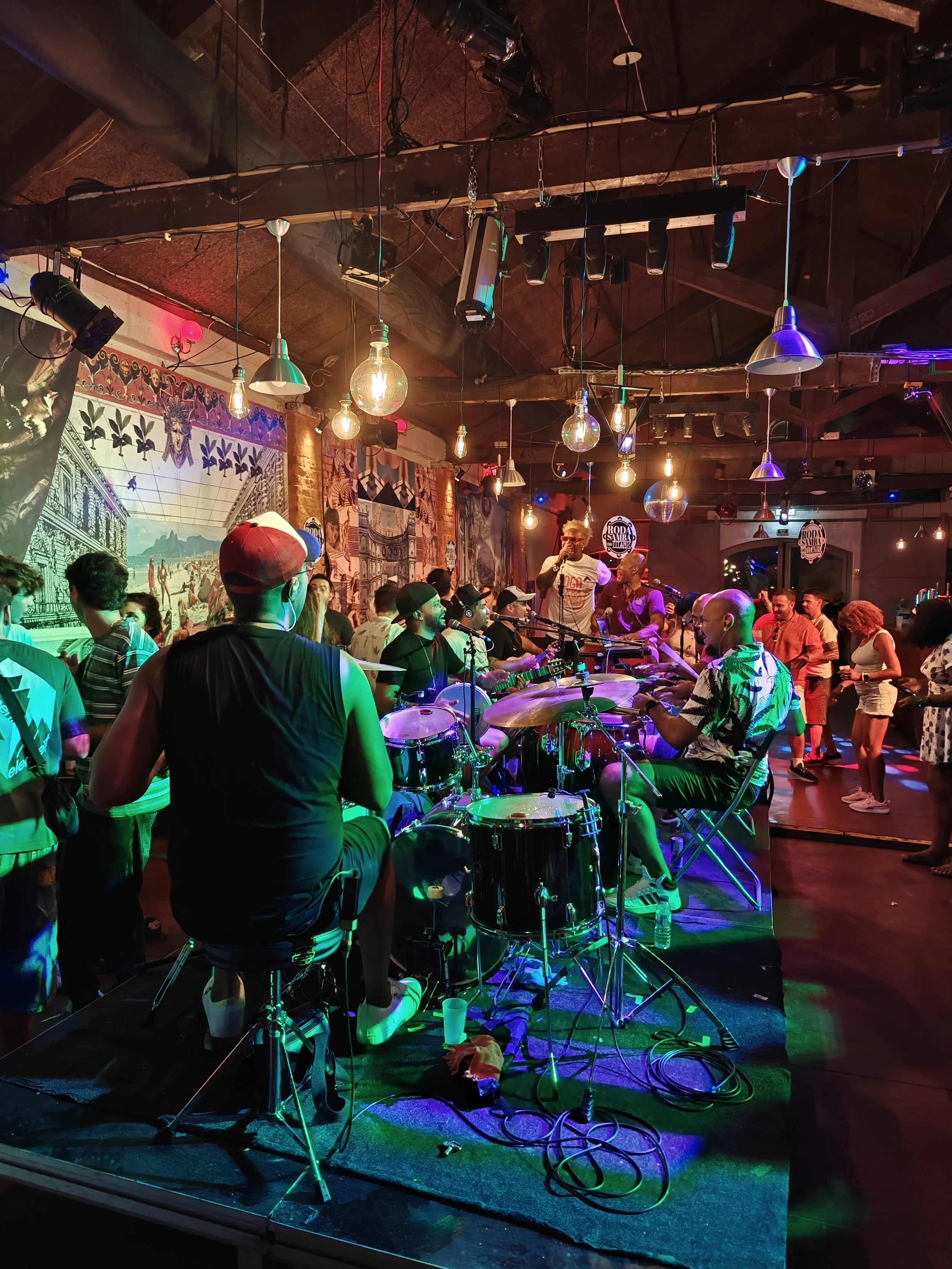
Brazilian Samba Roda performance in Lisbon
A cultural guide to Lisbon’s live music, dance, migration and nightlife beyond the usual bars and clubs
Most visitors meet Lisbon in daylight. They meet it through viewpoints, churches, tiled façades, trams, markets and monuments. Daytime Lisbon is extraordinarily photogenic, but it is also unusually good at presenting itself. The city knows how to be looked at. Centuries of history have been translated into plaques, guidebooks, museum rooms and carefully framed vistas over the Tejo river.
At night, something different happens. The monuments close. The camera becomes less useful. Neighborhoods that seemed primarily architectural begin to reorganize themselves around sound. A restaurant turns into a room of musicians. A basement becomes a dance floor. Portuguese, Cape Verdean, Brazilian, Angolan, Latin American and European rhythms begin occupying the same few kilometers of city.
And if you pay attention, Lisbon after dark can tell you something that its monuments cannot. It can tell you who actually lives here.
The city becomes more honest after dark
This sounds counterintuitive because nightlife is often considered the least serious part of travel. Museums are culture; nightlife is entertainment. Churches are history; dancing is what happens afterward.
Social anthropology would suggest almost the opposite. The places where people eat, dance, flirt, sing and gather informally often reveal social relationships more directly than official cultural institutions do. Who shares a room? Who controls the music? What languages are spoken? Who feels at home? Who is performing for tourists and who is simply living their life?
At night, these distinctions become visible.
Lisbon has long been a city of arrivals and departures. Its location on the Atlantic made it part of global networks of commerce, empire and migration centuries before cheap flights turned it into one of Europe’s most desirable weekend destinations. Portugal’s relationships with Brazil, Cape Verde, Angola, Guinea-Bissau, Mozambique and São Tomé did not disappear when colonial rule ended. They remain embedded in families, neighborhoods, food and music.
More recent immigration from South Asia, Eastern Europe, Latin America and elsewhere has added further layers.
You can read these histories in demographic data. But sometimes you can hear them more clearly in a room at midnight.
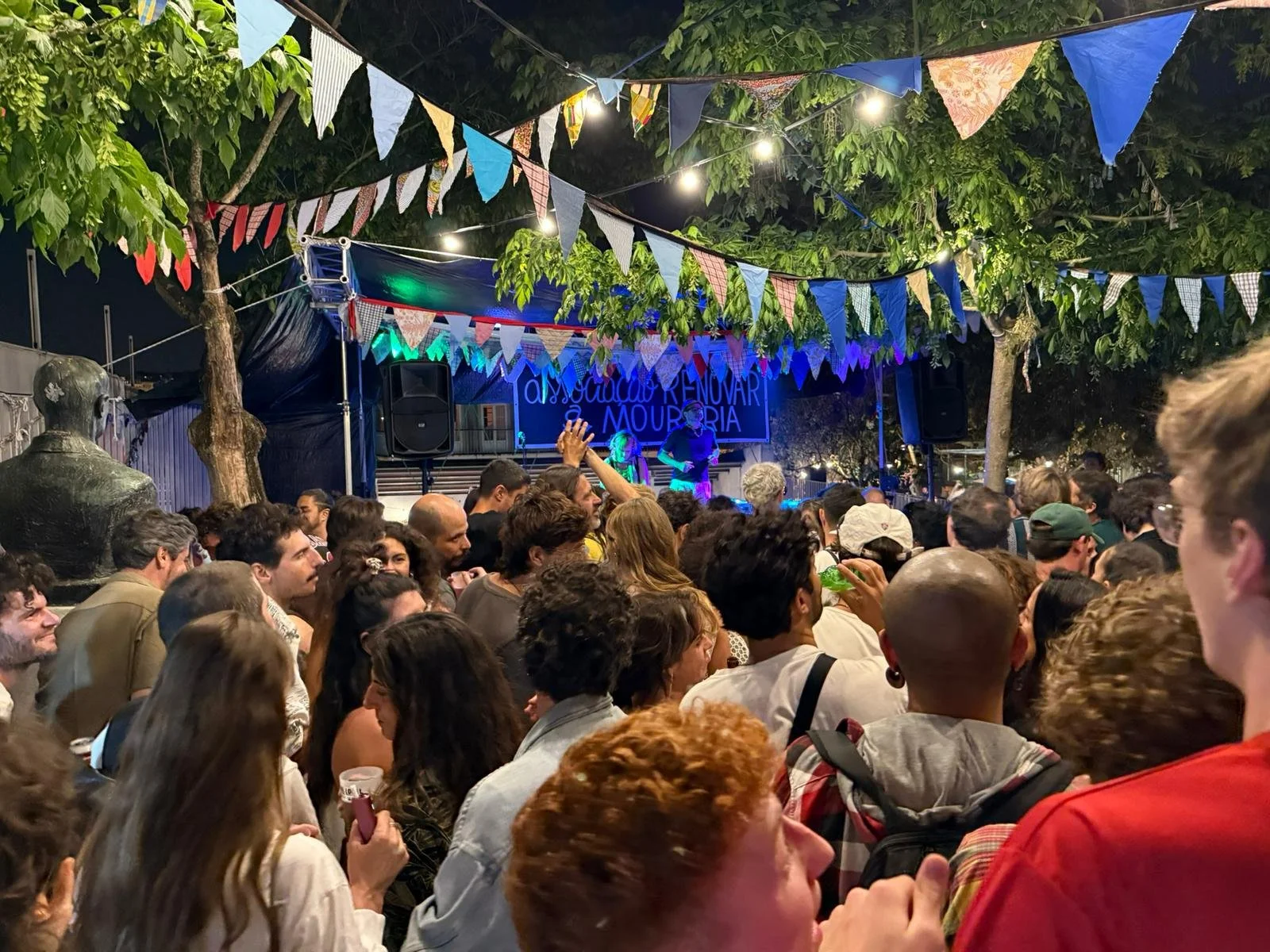
The Sardines Festival in Mouraria, Lisbon
Fado is not the soundtrack of Lisbon. It is one of them.
Tourism has given fado an almost impossible responsibility: to represent Lisbon.
The image is familiar. A dark room. A Portuguese guitar. A singer performing longing and saudade while visitors sit quietly over dinner.
Fado absolutely matters. It emerged from urban working-class environments and absorbed influences from maritime life, migration, poverty, bohemian culture and the social worlds of neighborhoods such as Mouraria and Alfama. It can still be extraordinarily intimate when the conditions are right. But treating fado as the sound of Lisbon freezes the city at a particular historical moment.
Modern Lisbon sounds far messier. On the same weekend, someone might hear traditional fado, Cape Verdean morna, funaná or batuque, Brazilian forró, samba, jazz, Afrobeat, electronic music, salsa, swing or musicians combining several traditions without worrying much about what category a tourism board would place them in.
This is not cultural confusion. It is precisely what port cities do. Cultures arrive, borrow, resist, reinterpret and create something new.
The most interesting question, therefore, is What kinds of Lisbon are being created through music right now?
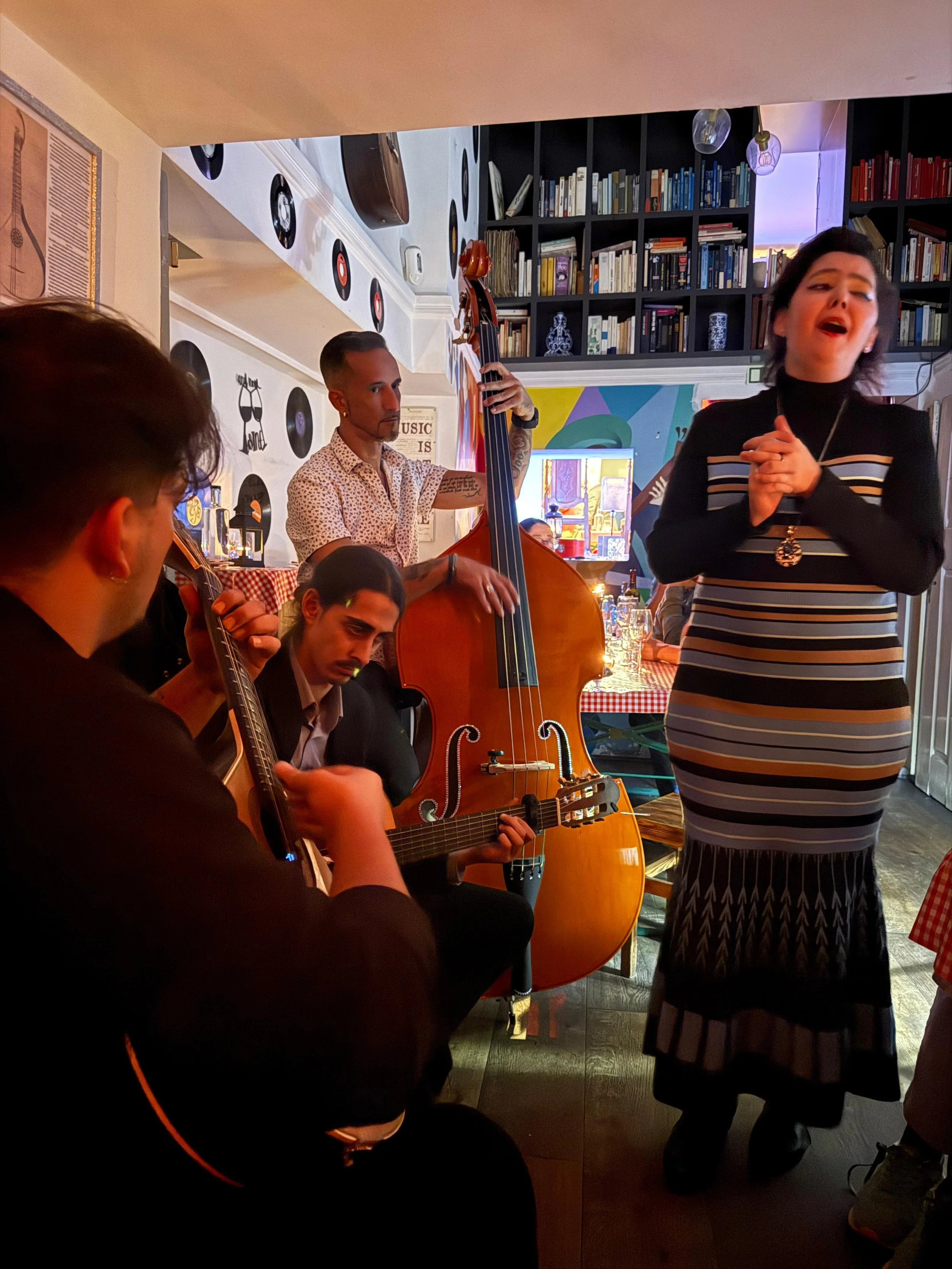
Fado musicians performing during a dinner in Lisbon
Cape Verde is closer to Lisbon than the map suggests
One of the most revealing ways to understand Lisbon is to spend time around Cape Verdean culture.
Cape Verde and Portugal are separated geographically by thousands of kilometers, but migration has woven the two places together for generations. Cape Verdean communities have profoundly influenced the cultural life of Lisbon and its metropolitan region, particularly through music, restaurants, social clubs and family networks.
This changes what it means to listen to music here. Morna is not simply an “African music experience” inserted into a European itinerary. Funaná is not an exotic addition to a Portuguese evening. These musical traditions belong to the contemporary social landscape of Lisbon because the people who carry them belong to Lisbon. That distinction matters.
Tourism often organizes culture according to national borders. You visit Portugal, therefore you expect Portuguese culture. But cities rarely respect those neat categories. Migration produces cities whose cultural identities extend far beyond their political borders.
A Cape Verdean restaurant in Mouraria can therefore tell you something fundamental about Lisbon. Not because it is unusual but because it is a vibrant part of the city.
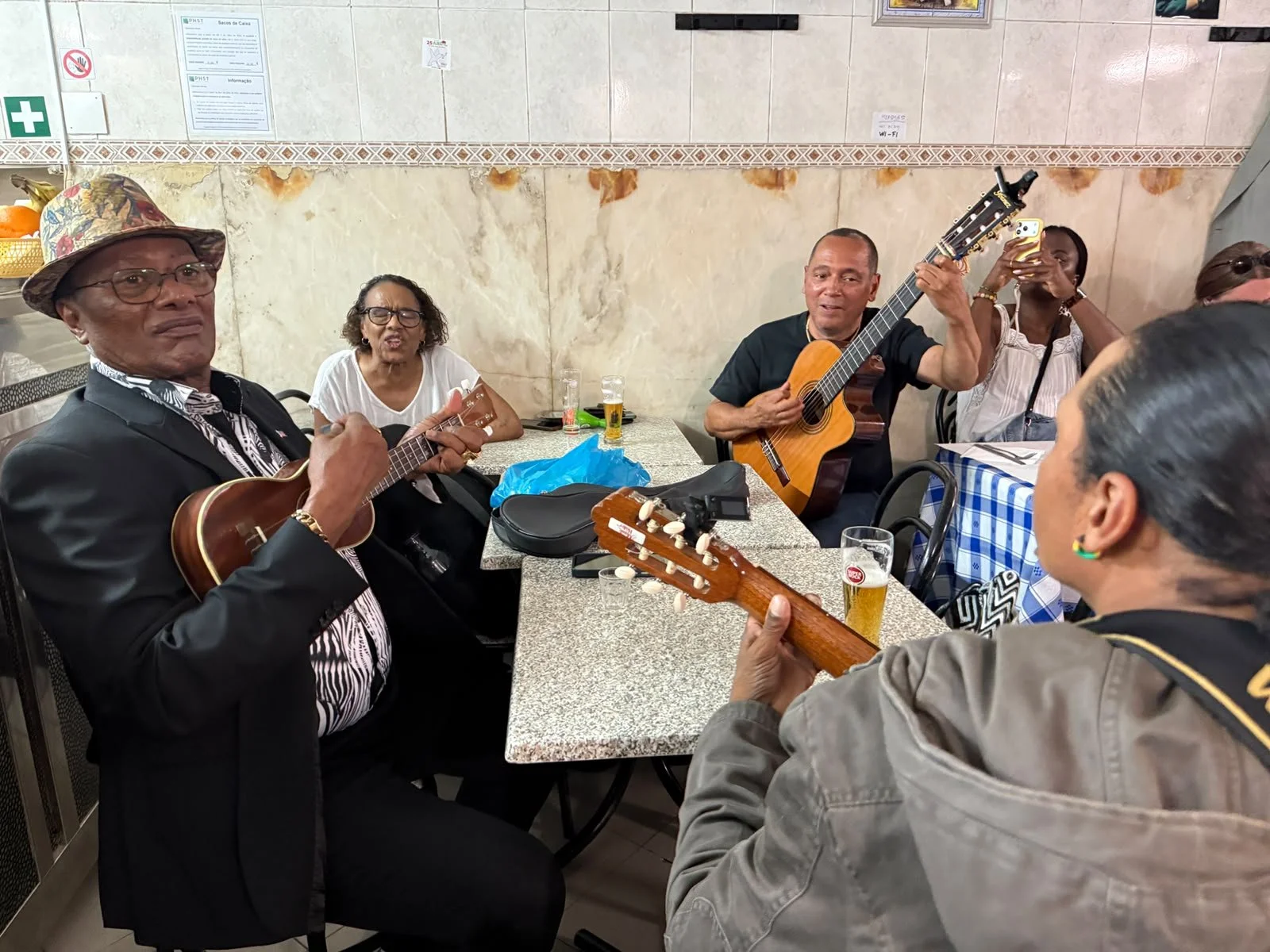
Cape Verdian restaurant spontaneous jam in Mouraria, Lisbon
Brazilian Lisbon exists too
Brazil’s influence creates another layer. Portuguese and Brazilian histories are inseparable, though not symmetrical. Colonial relationships, language, migration and contemporary mobility continue to connect the two countries in complicated ways.
At night these historical relationships can become remarkably ordinary. A forró dance night may contain Portuguese people, Brazilians, Europeans, Latin Americans and travelers who learned the dance somewhere entirely different. A samba roda may feel simultaneously Brazilian and unmistakably Lisbon.
This is one of the strange powers of dance. It allows culture to travel without remaining unchanged. A rhythm crosses an ocean, arrives in another social environment and begins creating new communities. People who might have very little in common elsewhere suddenly understand the same physical vocabulary.
Turn. Step. Pause. Follow. Lead. Listen… For a few hours, belonging can become something you do rather than something written on a passport.
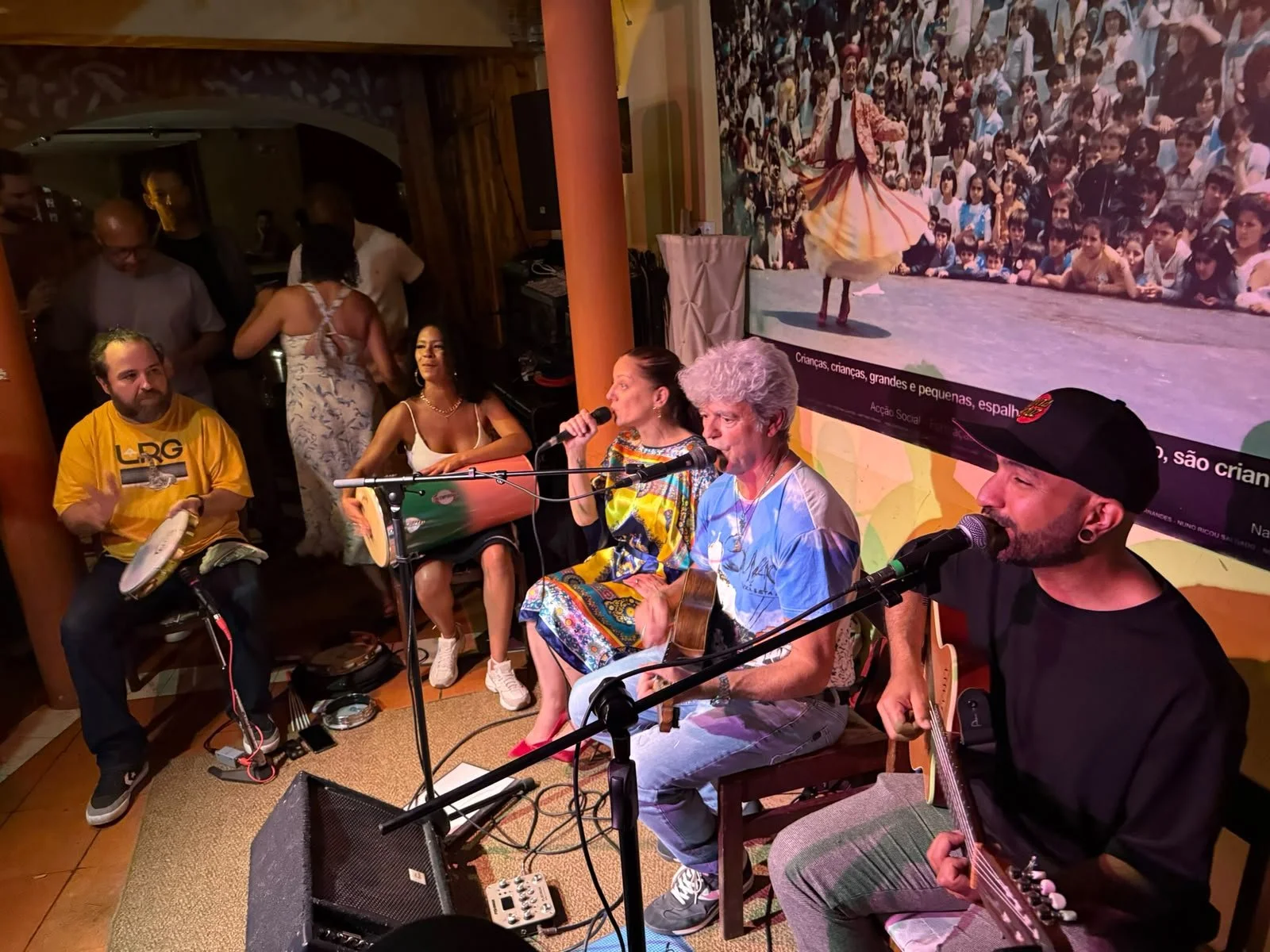
Samba performance in Lisbon
Dance floors are temporary societies
Anthropologists have long been interested in ritual because rituals temporarily reorganize ordinary social life. A good dance floor can do something similar.
During the day, Lisbon is heavily structured by class, profession, nationality, language and tourism. At night, some spaces partially suspend these categories. A lawyer might dance with a student. A Portuguese local may teach a visitor a step. Someone who barely speaks the language can participate through rhythm.
Of course, nightlife is not automatically egalitarian. Clubs have door policies. Drinks cost money. Gender shapes how people experience public space. Some venues feel welcoming to outsiders; others do not. Tourism itself can transform places that once belonged primarily to local communities.
But that tension is precisely why nightlife is culturally interesting. A dance floor becomes a temporary society negotiating who belongs. And watching those negotiations can reveal more about a city than another historical date memorized from a guidebook.
The best music nights are often the least efficient ones
Modern travel has become obsessed with optimization. We want the best restaurant, followed by the best bar, followed by the best concert, all arranged geographically and confirmed through reviews. Nightlife resists this.
A venue that was extraordinary last Thursday may be nearly empty next Tuesday. A famous place may disappoint. An unknown jam session may become the night you remember five years later.
Sometimes the musicians start late. Someone may spontaneously say, “There’s something happening somewhere else.” Occasionally dinner lasts much longer than expected because the people at the next table begin talking to you. This makes nightlife frustrating for itinerary design, and wonderful for travel.
The temptation is to solve uncertainty by scheduling everything. But perhaps uncertainty is part of the cultural experience.
A well-designed Lisbon night should therefore have a direction instead of a script.
You might know where you begin and have several possibilities for where the evening could lead. You might organize dinner near a music space while keeping another event in reserve. You might choose neighborhoods strategically while allowing the actual rhythm of the evening to decide when you move.
That is not poor planning but actual planning for reality.
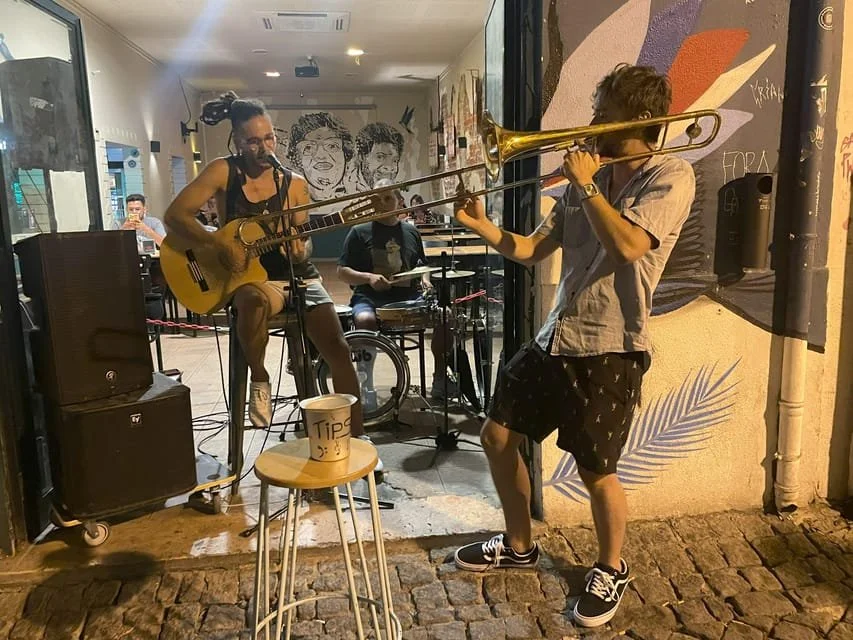
Musicians performing outside a bar in Lisbon
The danger of discovering a good place
There is another tension worth acknowledging. Travel writing constantly asks where travelers should go but every recommendation changes the thing being recommended.
A small music bar becomes popular on social media. Visitors arrive. Prices rise. The atmosphere shifts. Musicians adapt to a new audience. Eventually the space may become more famous for representing local culture than for actually serving the community that created it.
This is the paradox of cultural tourism. Travelers genuinely want local experiences but enough travelers looking for local experiences can make those experiences less local.
Lisbon has experienced this intensely. Areas once ignored by conventional tourism became desirable precisely because they felt different from the tourist center. Then accommodation, restaurants and investment followed the visitors. In some places, the economic success of “authenticity” began displacing the conditions that had produced it.
Nightlife is particularly vulnerable because cultural spaces often operate with small margins. This does not mean visitors should stay away. It means the relationship should be more thoughtful.
Buy a drink. Pay the entrance fee without complaining. Tip musicians when appropriate. Respect the room allowing for silence when needed. Do not treat every person as part of your content. Understand that sometimes the best cultural experience is simply being present without demanding to become the center of it.
The difference between attending and consuming
There is a subtle difference between entering a cultural space and consuming it. Consumption asks: What can this give me? Participation asks: How should I be here?
That distinction becomes important in intimate spaces. If musicians are performing for a room of people who have come primarily to listen, loudly narrating the experience to your companions changes the experience for everyone else. If a dance floor has its own social codes, paying attention before entering it is part of respecting the culture.
Sometimes the traveler’s most culturally intelligent act is observation. Not everything needs to become a photograph, the musician does not need to become a new friend. Not every local gathering needs to become “a hidden gem.”
The city owes us very little simply because we bought a plane ticket, and strangely, accepting that often leads to much richer encounters.
Where should you go for live music and dancing in Lisbon?
The most truthful answer changes from week to week. Lisbon has established fado houses, jazz venues, cultural associations, clubs and concert halls, but a large part of the city’s musical life also happens through changing events: jam sessions, social dances, temporary cultural programs, neighborhood festivals, artist collectives and one-off performances.
This is why searching only for “the best Lisbon nightlife” can be misleading. A better strategy is to decide what kind of evening you want.
If you want to listen deeply, look for smaller live performances. If you want to participate, explore social dance communities. If you are interested in migration and cultural exchange, seek spaces connected to Cape Verdean, Brazilian, African or other diaspora cultures. If you want experimentation, look beyond nightlife districts toward cultural centers, independent spaces and unconventional venues.
And do not assume that one evening needs one identity. A particularly Lisbon night might begin with Portuguese food, move into Brazilian dance, pass through an African-influenced music space and end with jazz.
This is not a contradiction but what a multicultural spontaneous vibrant city naturally brings in.
Why dinner matters more than it seems
In a nightlife itinerary, dinner might appear to be the practical interval between cultural activities. It can actually be one of the most important parts.
Restaurants are social institutions. They carry migration histories, family relationships, languages, memories and ideas about hospitality. Eating somewhere because the food is good is worthwhile. Eating somewhere while understanding who created the space and what community it belongs to creates another layer.
This is one reason I am skeptical of travel experiences that divide culture into separate boxes. Food tour. Music tour. History tour. Nightlife tour.
Real cities do not organize themselves this way. You eat while somebody tells you a story. Music begins unexpectedly. A conversation explains something you noticed two streets earlier. One experience changes the meaning of another.
The best cultural evenings therefore resemble narratives, and each chapter gives the next one more meaning.
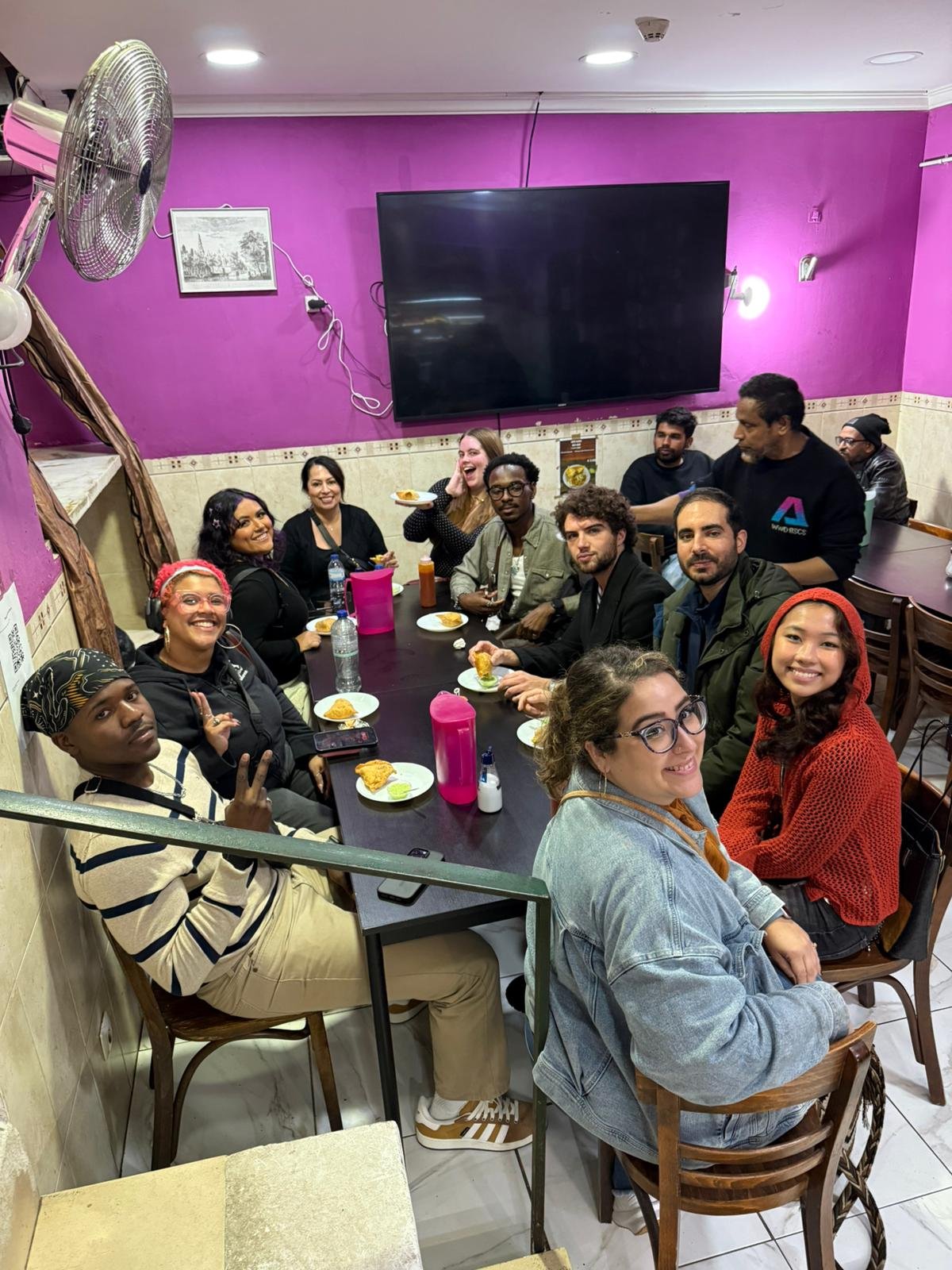
Bangladeshi Restaurant, Lisbon
Lisbon at night is a city of overlapping worlds
Perhaps the most interesting thing about Lisbon nightlife is the coexistence. An old Portuguese tavern and a Nepalese restaurant can exist within minutes of each other. Cape Verdean music may be happening near a space hosting experimental jazz. Brazilian dancers may gather in a city whose tourism advertising still relies heavily on fado and trams.
These worlds sometimes mix beautifully, and sometimes remain separate. Both are interesting.
Cities are not necessarily melting pots where everything becomes one harmonious culture. They may be better understood as overlapping social worlds: groups living beside one another, occasionally interacting, occasionally borrowing, occasionally disagreeing.
Nightlife makes those borders visible. Follow the sound through Lisbon for long enough and you begin seeing a different map, a map of frequency and belonging.
A different way to spend a night in Lisbon
If I were advising someone who genuinely wanted to understand Lisbon after dark, I would not begin by giving them five bars.
I would begin by asking what makes them curious. Do they dance? Do they want intimacy or energy? Are they interested in migration, jazz, African culture, Brazilian music, fado, social dance or unexpected spaces? Would they rather watch something extraordinary or participate in something imperfect?
Those questions produce a much better evening. The itinerary can then be built around what is actually happening that night. Perhaps it starts before sunset with a walk through a neighborhood whose history gives context to the music later. Perhaps dinner happens somewhere connected to one of Lisbon’s migrant communities. Perhaps there are two or three musical possibilities rather than one rigid reservation.
And perhaps the night ends somewhere none of us predicted at five in the afternoon. That possibility is not a flaw. It might be the point that makes the experience flamboyant and memorable.
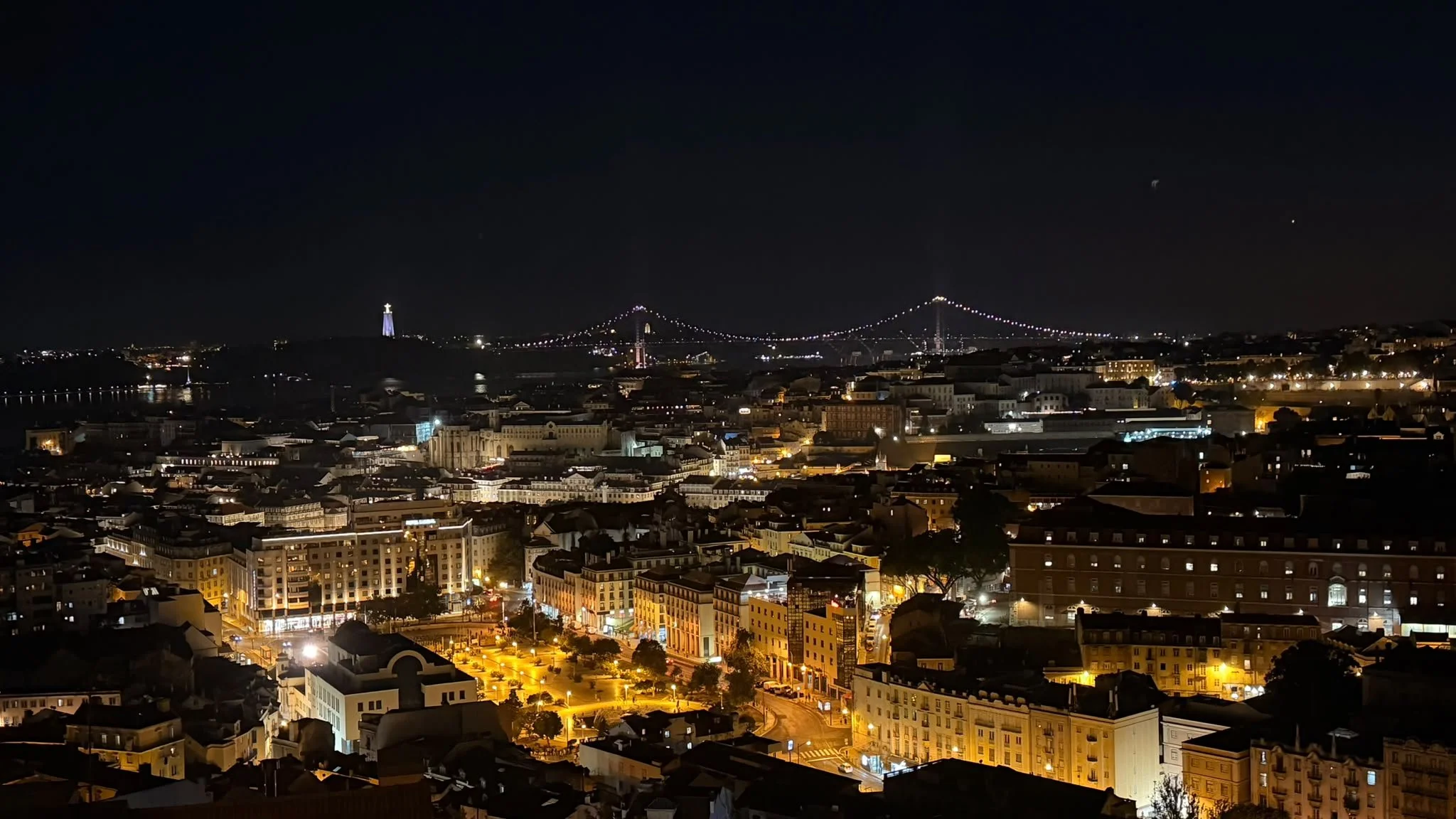
Lisbon at night
Frequently Asked Questions About Lisbon Nightlife and Live Music
Is Lisbon good for live music?
Yes, but Lisbon’s live music culture is broader than fado. Depending on the night, visitors can encounter jazz, Cape Verdean music, Brazilian music, African rhythms, rock, electronic music, jam sessions and international performers alongside traditional Portuguese music. The strongest options vary considerably by date, which makes checking current cultural programs important.
Where can I dance in Lisbon?
Lisbon has active communities around forró, salsa, bachata, kizomba, swing and other social dances, alongside clubs and occasional live-music events where dancing develops more spontaneously. Many of the most interesting events are organized around particular nights instead of permanent tourist venues.
Is Lisbon nightlife only in Bairro Alto and Cais do Sodré?
No. Those areas remain important nightlife centers, particularly for bars and clubs, but Lisbon’s cultural nightlife extends through neighborhoods and independent venues across the city. Live music, community events, social dance and cultural programs often happen well beyond the best-known nightlife districts.
What is the best way to experience Lisbon nightlife as a visitor?
Rather than trying to visit as many bars as possible, choose a few experiences that connect with your interests and allow flexibility. A combination of dinner, live music, social dance and one or two culturally interesting spaces often produces a more memorable evening than a conventional bar crawl.
About Soul Dreamers
Soul Dreamers creates culturally immersive, community-rooted travel experiences designed around people, stories and meaningful human connection. It began in Lisbon with our signature multicultural experience, which brings together social history, migration, street art, local food, independent businesses, viewpoints, community relationships and live music to reveal the city beyond its postcard image.
We are now expanding that philosophy into personalized and custom-designed journeys and multi-day itineraries, working both directly with travelers and with travel advisors, retreat leaders, organizations and small groups who want something more personal than a conventional travel package. Portugal is our main destination-development focus, with emerging community-rooted journeys in Colombia and Morocco being developed more gradually through local relationships. Whether we are designing one evening in Lisbon or an entire journey, the principle remains the same: travel should not only help us see a place; it should help us understand the people and relationships that give it its soul.
Book your Lisbon experience here: https://www.souldreamers.net/lisbon#bookingcalendar
Contact us for a personalized multi-day itinerary at +36 703880373 or via email at info@souldreamers.net
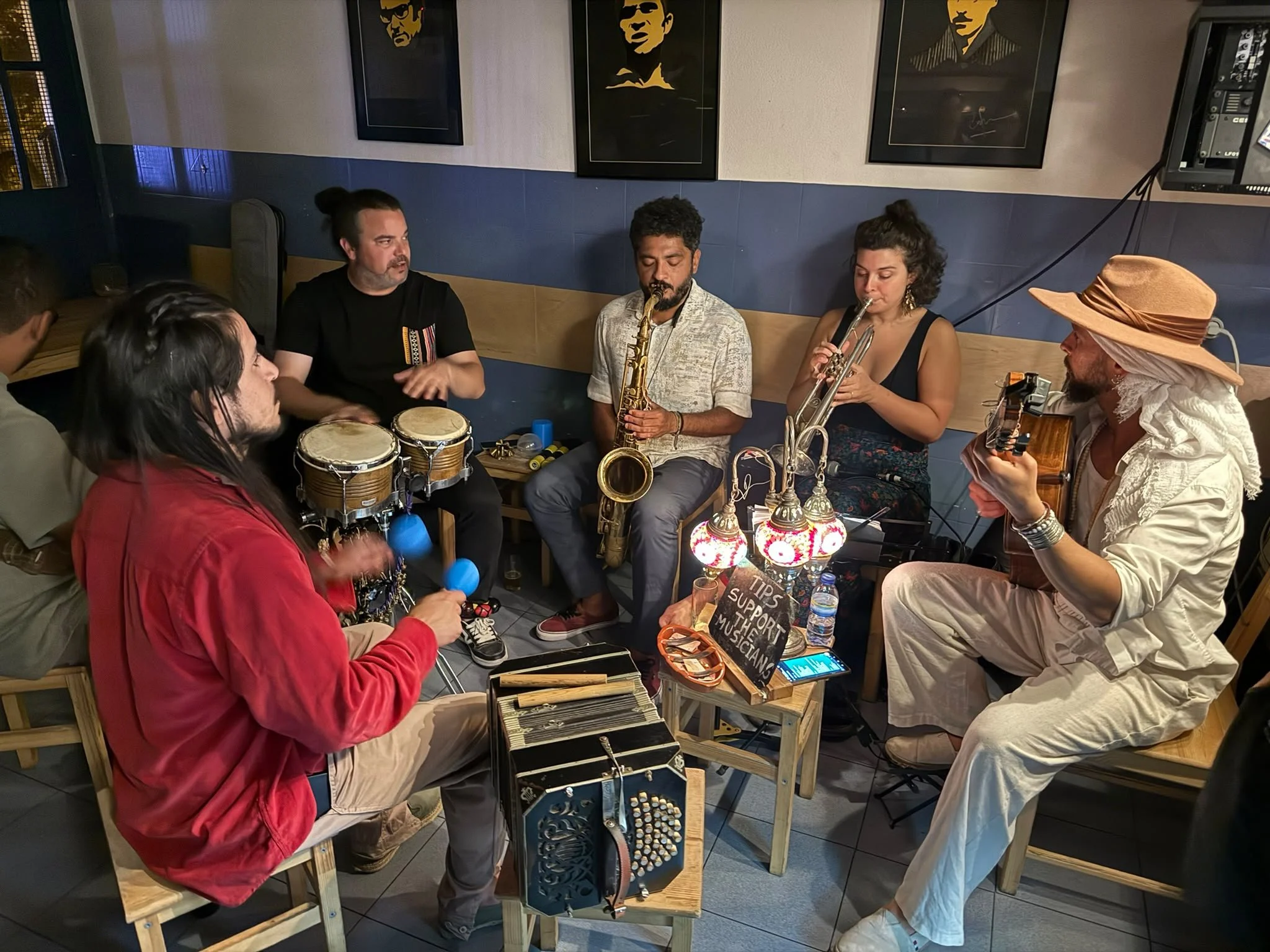
Mexican Live Bolero Music in Alfama, Lisbon
